Eliminating Dead Zones: Optimizing Magnetic Separation Rods Layout in Pipeline Magnetic Separators
2026-01-15
The pipeline magnetic separator is a critical defender in process lines, silently capturing ferrous contaminants. At its core are the magnetic separation rods that generate the capturing force. However, a persistent challenge exists: "dead zones" – areas where magnetic force is weak or flow is stagnant, allowing impurities to escape. Optimizing the arrangement of these magnetic separation rods is the key to maximizing efficiency and ensuring product purity.

Understanding the "Dead Zone" Challenge in Pipeline Magnetic Separators
Dead zones aren't a sign of failure, but a physical constraint to be managed. They arise from two main factors inherent to the design of a pipeline magnetic separator.
1. Magnetic Field Gaps Between Rods
Each magnetic separation rods has a finite, gradient magnetic field. When multiple rods are placed side-by-side in a grid, the space between them can become a zone of weaker magnetic force. Fine or weakly magnetic particles traveling precisely through these gaps may not be captured.
2. Flow-Related "Shadow" Zones
Material flow within the pipe is rarely perfect. In liquid applications, viscous materials can create slow-moving layers along the pipe wall, shielding contaminants from the central magnetic field. In powder systems, poor flowability can cause "bridging" or material buildup, creating physical barriers that prevent fresh material from contacting the magnetic separation rods.
The Optimization Strategy: Smarter Layouts for Your Magnetic Separation Rods
Overcoming these limitations requires intelligent design that maximizes magnetic coverage and promotes optimal material interaction.
Core Principle: Staggered & Multi-Layer Grids
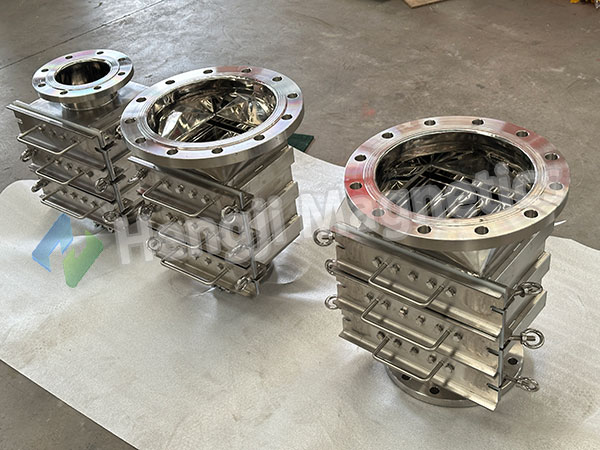
The most effective method is to use multiple layers of magnetic separation rods in a staggered arrangement.
-
How it works: The rods in the second layer are positioned directly behind the gaps of the first layer. This creates a three-dimensional magnetic "net" that intercepts particles trying to slip through linear weak spots, significantly reducing planar dead zones.
Advanced Design Considerations for Maximum Coverage
-
Precision Spacing & Rod Diameter: Sophisticated magnetic modeling determines the optimal distance between magnetic separation rods and their ideal diameter for a given pipe size. The goal is to ensure the combined magnetic field in the "saddle point" between rods remains strong enough to capture target contaminants.
-
High-Performance Magnets: Using high-grade Neodymium (NdFeB) magnets increases the strength and reach of each individual magnetic separation rods. This allows for either greater effective coverage with the same grid density or the maintenance of high performance with slightly wider spacing.

Enhancing Performance Through Material Flow Management
The best magnetic trap is useless if material doesn't reach it. Optimizing flow is crucial for any pipeline magnetic separator.
For Liquids & Slurries:
-
Design pipe sections and internal baffles to promote gentle turbulence as material passes the rod grid, disrupting laminar flow and sweeping all fluid through the high-field zone.
-
Ensure flow velocity is within an optimal range—too slow allows settling, too fast reduces contact time.
For Powders & Granular Materials:
-
Consider integrated vibrators or air-pulse systems to prevent material bridging and ensure a consistent, fluidized flow across all magnetic separation rods.
-
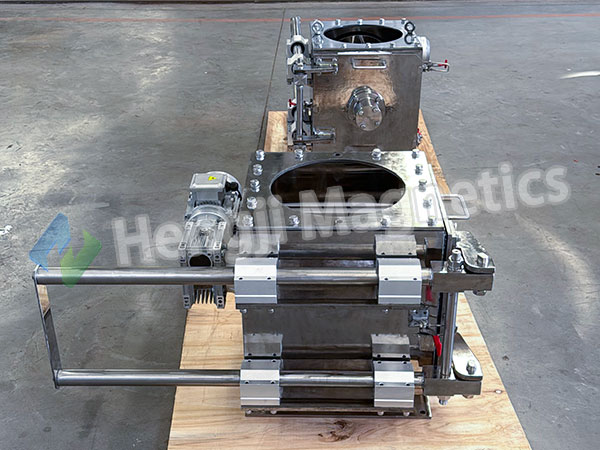
For cohesive materials, a rotating magnet assembly can actively "wipe" the rod surface, preventing buildup and exposing clean magnetic surface area.
Maintaining Peak Efficiency: The Cleaning Factor
A saturated magnet is a weak magnet. Iron buildup on the magnetic separation rods itself creates the most significant operational "dead zone."
-
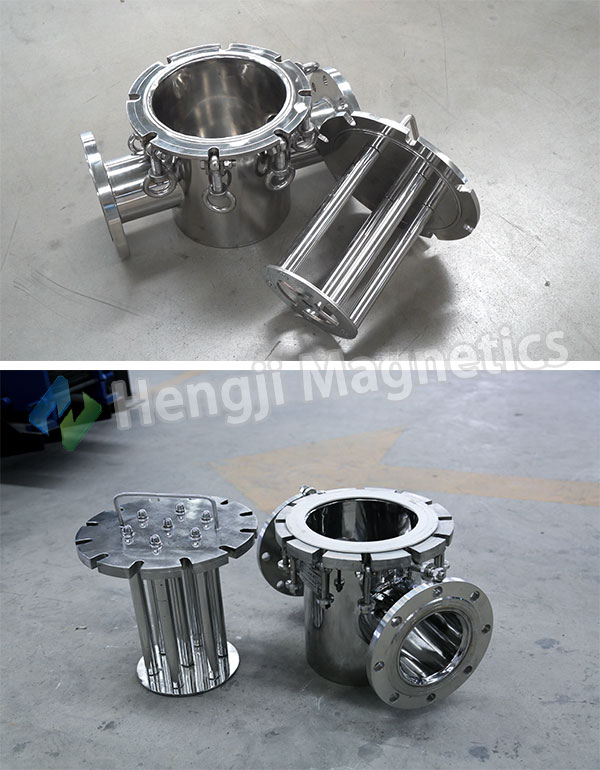
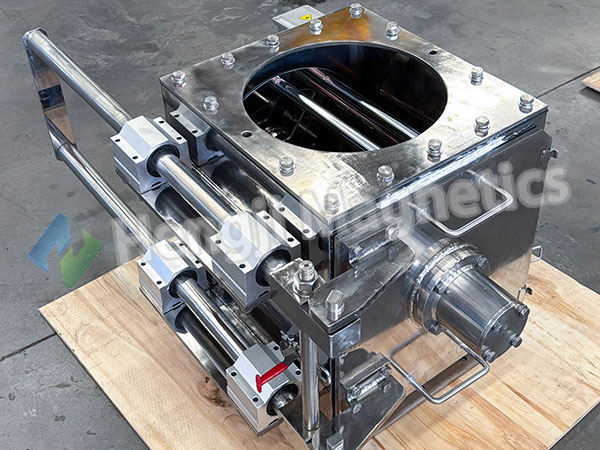
Automated Cleaning Systems: Modern pipeline magnetic separator designs feature pneumatic or mechanical systems that retract or wipe the rods on a programmed cycle. This automated discharge prevents performance decay and maintains consistent magnetic strength.
-
Twin-Unit Systems: For critical, continuous processes, a dual pipeline magnetic separator system allows one unit to be cleaned offline while the other remains in operation, guaranteeing zero downtime and 100% protection.
System-Level Solutions for Ultimate Purity
For the most stringent requirements, consider these approaches:
-
Stepped or Enlarged Pipe Sections: A locally enlarged housing around the magnet grid reduces flow velocity, increasing the dwell time of contaminants in the magnetic field.
-
Multi-Stage Separation: Installing two pipeline magnetic separator units in series acts as a primary and secondary "polishing" stage. This system redundancy catches any rare particles that evade the first trap, delivering exceptional final purity.
Conclusion: A Holistic Approach to Pipeline Protection
Eliminating dead zones in your pipeline magnetic separator is not about finding a single perfect layout, but implementing a holistic strategy:
-
Design Smart: Employ multi-layer, staggered grids of high-strength magnetic separation rods.
-
Manage Flow: Ensure your process conditions promote uniform material contact with the magnet array.
-
Clean Proactively: Implement automated rod cleaning to prevent saturation.
-
Think in Systems: For ultimate assurance, consider staged separation or twin-unit setups.
By understanding and addressing these core principles, you can specify or optimize a pipeline magnetic separator that delivers reliable, high-efficiency protection for your valuable process line and final product quality.
Beyond Protection: 316L Stainless Steel for Next-Gen Food Grade Industrial Magnetic Separators
How a Conveyor Metal Detector and a Conveyor Belt Magnetic Separator Work Together
Related Article
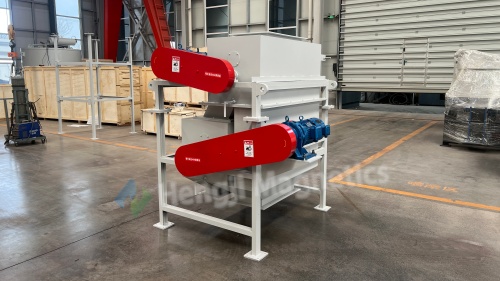
Rare earth dry drum magnetic separator combines rare earth magnetic force with dry processing to remove fine iron from powders, with no demagnetization and low energy use.
Rare Earth Dry Drum Magnetic Separator: Rare Earth-Level Magnetic Force for Dry Processing
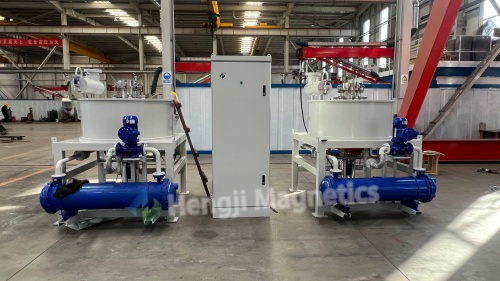
Dry electromagnetic food grade magnetic separators ensure safe, thorough iron removal from food powders with hygienic stainless steel construction and oil-cooled electromagnetic coils.
Food Grade Magnetic Separators and Dry Electromagnetic Separator: Ensuring Safe and Thorough Iron Removal in Food Powders