Beyond Protection: 316L Stainless Steel for Next-Gen Food Grade Industrial Magnetic Separators
In critical processing industries, the equipment you choose directly impacts product purity, safety, and brand reputation. Standard industrial magnetic separators may protect machinery, but they can introduce risks in sensitive applications. For operations where contamination is not an option, the material and design of your separator are non-negotiable. This guide explains why 316L stainless steel has become the gold standard for true food grade magnetic separators and heavy-duty industrial magnetic separators in demanding environments.
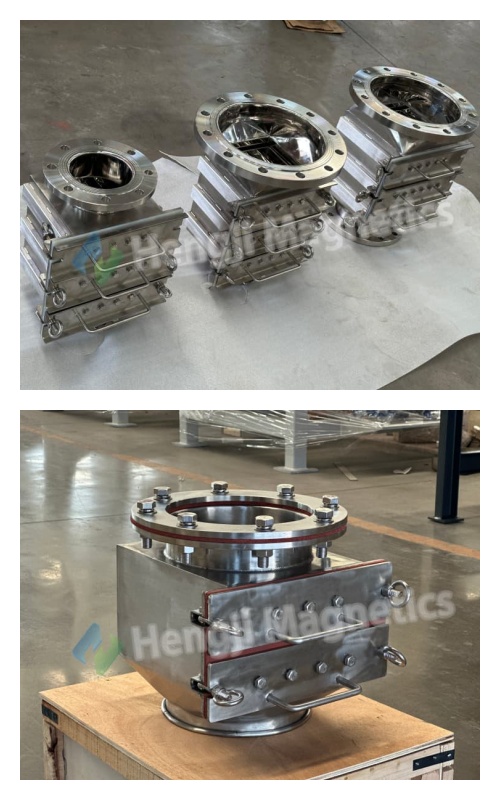
The Material Science: 316L Stainless Steel vs. Common Alternatives
The choice begins at the molecular level. While 304 stainless is common, 316L offers a superior composition engineered for resilience.
-
Unmatched Corrosion Resistance: The key differentiator is Molybdenum (Mo). This addition gives 316L exceptional resistance to chlorides (like salt and sanitizers), acids, and caustics. Where a standard industrial magnetic separators might corrode, a 316L food grade magnetic separators maintains its integrity, preventing pitting and ensuring a long service life without compromising the process stream.
-
Hygienic by Design: 316L can be polished to a mirror-like, ultra-smooth finish. This creates a non-porous surface that prevents material buildup, resists bacterial adhesion, and allows for thorough, rapid cleaning. This is the foundational requirement for any equipment to be classified as a true food grade magnetic separators.
-
High-Temperature & Structural Stability: 316L retains its strength and corrosion resistance across a wider temperature range. This is vital for processes involving hot materials or rigorous cleaning-in-place (CIP) cycles with high-temperature water and steam, a common need in both pharmaceutical plants and advanced industrial magnetic separators applications.
Sanitary Design Features of 316L Food Grade Magnetic Separators
Material alone isn't enough; the construction must uphold the same sanitary principles. Modern food grade magnetic separators are built with cleanability as a core function.
-
Seamless, Welded Construction: Contact surfaces feature continuous welds that are ground and polished smooth, eliminating cracks, crevices, and threads where product or microbes could hide.
-
Optimized Drainage & No Dead Zones: Housings are designed to be fully drainable. Internal angles are radiused, and connections use sanitary clamp fittings to ensure the entire product zone can be effectively cleaned and inspected.
-
Easy Disassembly & Access: Critical components are designed for quick, tool-free disassembly without specialized training, facilitating regular inspection, manual cleaning, and validation—a key tenet of Good Manufacturing Practices (GMP).
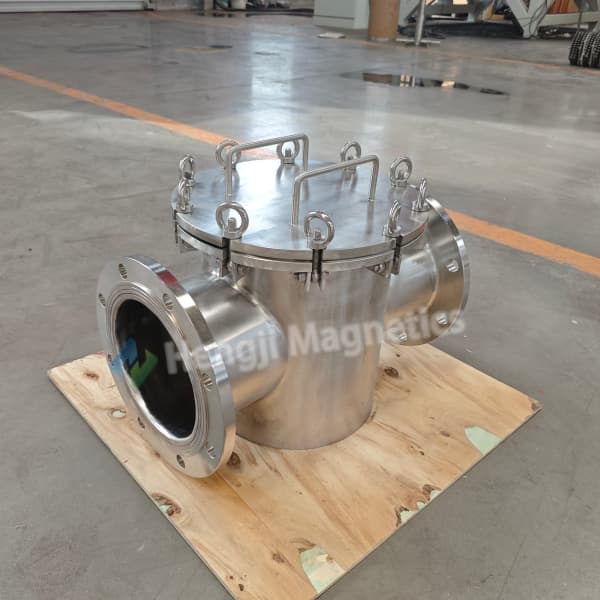

The Magnetic Core: Powerful, Protected, and Isolated
The separation power must be robust, but never a contamination risk.
-
High-Intensity Magnetic Circuits: These industrial magnetic separators utilize high-grade Rare Earth (Neodymium) magnets arranged in dense, multi-stage grids. This provides the powerful magnetic field required to capture fine ferrous and weakly magnetic contaminants, even from fast-flowing streams.
-
Complete Physical Isolation: The magnets are hermetically sealed within the 316L stainless steel tubes or plates. The magnetic force acts through the wall, meaning the magnet source itself never contacts the product. This eliminates any risk of magnet erosion, coating wear, or metallic contamination, which is paramount for food grade magnetic separators.
Applications: Where 316L Industrial Magnetic Separators Are Essential
Understanding where to apply this technology is crucial for risk management.
-
Food & Beverage: From powders like flour and spices to liquids like sauces, syrups, and dairy. A food grade magnetic separators protects consumer safety and complies with strict FDA and global food safety standards (HACCP, BRC, IFS).
-
Pharmaceutical & Nutraceuticals: In the production of active ingredients, excipients, and final dosage forms. A 316L industrial magnetic separators ensures product purity, prevents cross-contamination between batches, and supports validation protocols.
-
Fine Chemicals & High-Purity Plastics: Protecting catalysts, ensuring the color and clarity of polymers, and safeguarding sensitive chemical processes from metallic catalyst poisoning.

Conclusion: An Investment in Assurance
Choosing a 316L stainless steel food grade magnetic separators or heavy-duty industrial magnetic separators is not just a purchase—it's an investment in operational integrity. It represents a commitment to:
-
Product Safety & Purity: Eliminating a major source of physical and chemical contamination.
-
Regulatory Compliance: Meeting and exceeding the material and design standards of your industry.
-
Operational Reliability: Reducing downtime for cleaning and maintenance with a robust, corrosion-resistant design.
-
Brand Protection: Safeguarding your reputation by ensuring your products are consistently pure and safe.
For processes where compromise is not an option, specify 316L. It’s the clear standard for separation you can trust.
Magnetic Head Pulley or Magnetic Drum? Choosing the Right Magnetic Solution for Your Conveyor System
Eliminating Dead Zones: Optimizing Magnetic Separation Rods Layout in Pipeline Magnetic Separators
Related Article