High Gradient Magnetic Separator: Mastering the Magnetic Separation Technique for Ultra‑Fine Particle Capture
2026-06-11
In advanced processing lines for quartz sand purification, kaolin whitening, and battery material cleaning, iron removal is no longer about capturing visible rust particles. The battle is against micron‑sized, weakly magnetic impurities—hematite, limonite, mica flakes—that hide deep in the powder. Their magnetism is so weak and their size so small that most traditional magnetic separators fail. This is where the high gradient magnetic separator demonstrates its unique value. It represents a major leap forward in the magnetic separation technique, shifting the focus from “how strong is the field” to “how high is the gradient.”
By packing magnetizable stainless steel wool, expanded mesh, or special toothed matrices into a strong background field (generated by an electromagnet), each fiber tip becomes an intense “magnetic point” with pulling power orders of magnitude higher than a conventional magnetic bar. Any weakly magnetic particle that flows through this zone experiences a force far exceeding its own weight and is firmly captured.

How Does a High Gradient Magnetic Separator Balance High Capture Rate and Throughput?
For any mineral processing engineer, the most impressive capability of the high gradient magnetic separator is how it maintains an extremely high capture rate for fine impurities while handling substantial throughput. This is the core measure of the magnetic separation technique at industrial scale.
Advanced high gradient magnetic separator units increase matrix chamber volume and filtration area to match high flow rates. The packing density and arrangement of the magnetic matrix are precisely controlled. As slurry passes through the matrix layer, every portion of pulp has ample opportunity to contact those high‑gradient magnetic points.
In terms of field excitation, a powerful electromagnet coil provides the background magnetic energy. Field strength and stability can be adjusted steplessly by varying the excitation current. Operators can tune the field based on feed characteristics—iron content, particle size—to find the optimal balance between throughput and iron removal precision. This gives the magnetic separation technique valuable flexibility and adaptability in real‑world applications.
What About Matrix Saturation and Clogging? How Does the Magnetic Separation Technique Ensure Continuous Operation?
Achieving extremely high separation precision inevitably brings the engineering challenge of matrix saturation and clogging. How to clean the matrix efficiently and reliably without interrupting material flow is the most practical concern for customers evaluating the high gradient magnetic separator.
To solve this, advanced high gradient magnetic separator units use fully automatic alternating‑chamber operation with back‑flush cleaning. The system typically has two or more independently operating separation chambers.
When the matrix in one chamber becomes saturated with captured iron, the control system automatically cuts excitation current to that chamber and switches to a clean chamber to continue processing. The offline chamber, now de‑energized, activates high‑pressure water or compressed air back‑flush. The powerful reverse flow blasts the accumulated iron sludge out of the matrix. After cleaning, the chamber returns to standby, ready for the next switch.
This sophisticated automation allows the high gradient magnetic separator to combine the ultimate precision of the magnetic separation technique with the demanding requirement of industrial continuous operation. It achieves stable, high‑purity output with minimal manual intervention.
Which Materials Benefit Most from a High Gradient Magnetic Separator?
The high gradient magnetic separator is essential wherever micron‑sized, weakly magnetic impurities must be removed to achieve high product value.
-
High‑purity quartz (photovoltaic grade): Removing hematite and other iron oxides to lower Fe₂O₃ below 10 ppm for solar glass and crucibles.
-
Kaolin for paper coatings: Eliminating yellow‑causing iron and titanium impurities to boost brightness above 90%.
-
Battery precursors (LFP, NMC, graphite): Reducing magnetic foreign matter to parts‑per‑billion levels to prevent battery short circuits.
-
Ceramic and refractory powders: Removing iron that causes black spots in final fired products.
-
Fine chemicals and pigments: Purifying titanium dioxide, catalysts, and organic pigments without altering chemical properties.
In each case, the high gradient magnetic separator demonstrates the power of the magnetic separation technique to solve previously impossible purification challenges.
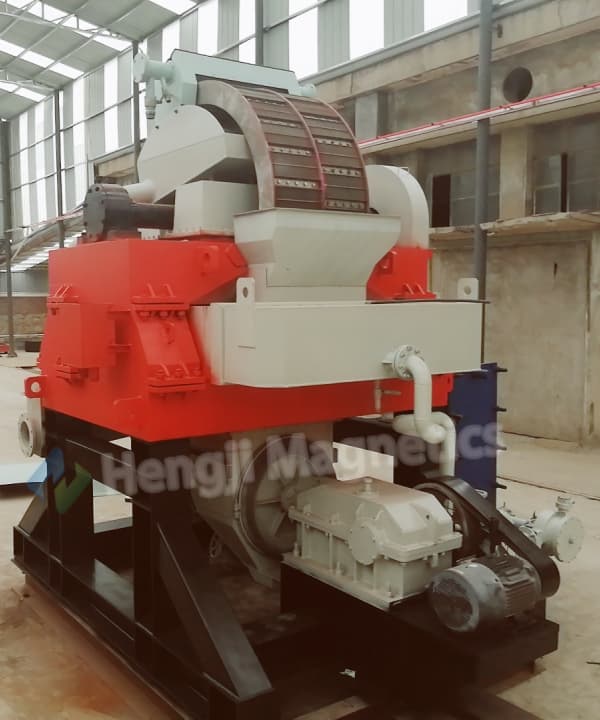
What Maintenance Practices Keep a High Gradient Magnetic Separator Efficient?
Despite the advanced magnetic separation technique involved, maintenance of the high gradient magnetic separator is well‑defined and manageable.
-
Daily: Verify that the automatic chamber switching system functions correctly. Check back‑flush water or air pressure. Inspect discharge valves for proper sealing.
-
Weekly: Examine matrix wires or mesh for wear or breakage through viewing ports. Replace any damaged matrix elements immediately to maintain gradient performance.
-
Monthly: Measure background field strength with a Gauss meter. Compare to baseline; if decay exceeds 5%, inspect coil and cooling system.
-
Annually: Replace O‑rings, seals, and gaskets. Service pneumatic or hydraulic actuators. Calibrate the switching cycle timing. Change cooling oil or clean cooling water circuits (for electromagnetic units).
Because the high gradient magnetic separator is highly automated, operator intervention is minimal. Most maintenance is preventive and can be scheduled during planned plant shutdowns.
Conclusion: The New Standard in Ultra‑Fine Particle Purification
The high gradient magnetic separator represents a deep integration of cutting‑edge hardware with the proven magnetic separation technique. By combining a high‑gradient matrix, precise flow control, and automated alternating‑chamber cleaning, it delivers continuous, high‑throughput, ultra‑high‑purity separation of micron‑sized weakly magnetic impurities.
For processors of quartz, kaolin, battery materials, ceramics, and fine chemicals, the high gradient magnetic separator is not just an upgrade—it is the key to unlocking premium markets. Choose a high gradient magnetic separator that has been validated in real production environments. Experience how the magnetic separation technique can be pushed to its practical limits, achieving parts‑per‑million iron levels with uninterrupted, automatic operation.
Dry Drum Magnetic Separator: Enhancing Pre‑Concentration in Dry Magnetic Separation of Iron Ore
Magnetic Grate Separator: Redefining Inline Magnetic Separator Standards for Powder Purification
Related Article
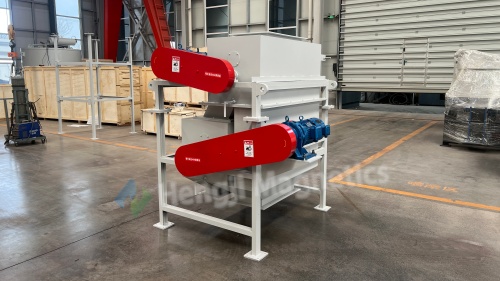
Rare earth dry drum magnetic separator combines rare earth magnetic force with dry processing to remove fine iron from powders, with no demagnetization and low energy use.
Rare Earth Dry Drum Magnetic Separator: Rare Earth-Level Magnetic Force for Dry Processing
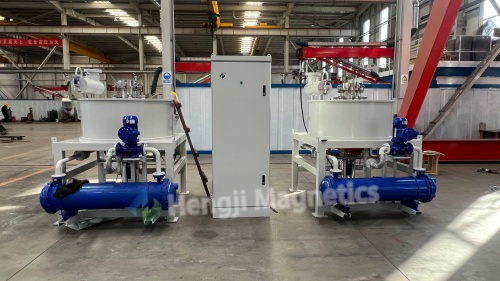
Dry electromagnetic food grade magnetic separators ensure safe, thorough iron removal from food powders with hygienic stainless steel construction and oil-cooled electromagnetic coils.
Food Grade Magnetic Separators and Dry Electromagnetic Separator: Ensuring Safe and Thorough Iron Removal in Food Powders