Media Clogged? How to Correctly Set the Backwash System on Your Dry High Gradient Magnetic Separator
Magnetic media clogging is the most common and frustrating problem affecting the performance of a dry high gradient magnetic separator. When the steel wool, mesh, or rods become packed with captured ferrous particles, separation efficiency plummets, product purity suffers, and production grinds to a halt. The solution lies not in constantly reacting to clogs, but in preventing them through a properly configured backwash system. This guide provides the essential parameters and procedures to keep your dry magnetic separator media clean and your process running at peak efficiency.

Understanding the Enemy: Why Media Clogs
-
High Ferrous Load: Feed material contains more magnetic particles than the high gradient magnetic separator can process before cleaning.
-
Moisture or Ultra-Fines: Damp, sticky materials or sub-10 micron powders adhere to media and bridge gaps.
-
Insufficient Fluidization: The feed mechanism fails to keep particles dispersed.
-
Backwash Failure: The cleaning system is improperly set, too weak, or scheduled too infrequently.
Correct Backwash System Settings: The Four Critical Parameters
1. Choice of Flushing Medium
-
Compressed Air: The standard choice for most dry magnetic separator applications. It must be absolutely dry, clean, and oil-free. Install a multi-stage filter system (water separator, oil coalescer, particulate filter) to prevent moisture or oil from cementing particles into the media of your high gradient magnetic separator.
-
Inert Gas (Nitrogen): Mandatory for processing combustible materials like coal dust or reactive metal powders. Safety overrides cost in these environments.


2. Pressure and Flow – The Sweet Spot
-
Pressure Range: Typically 0.5 to 0.8 MPa (70-115 psi). The goal is "high enough to strip, not so high as to damage."
-
Too low: Leaves particles embedded.
-
Too high: Can distort delicate media matrices or waste compressed air.
-
-
Flow Volume: Instantaneous flow is critical. Ensure piping, valves, and compressor capacity deliver a sudden surge, not a weak trickle.
-
Tuning Method: Start low (0.3 MPa) and increase gradually while observing discharge. The optimal pressure is reached when particles eject in bursts, not a steady dribble, and the media appears clean downstream.
3. Timing and Cycling – Automation is Key
-
Duration per Cycle: 10 to 30 seconds is typical. Enough to clean, not so long as to waste air.
-
Cycle Interval: Adjust based on your feed's ferrous content.
-
High contamination: Clean every 15-30 minutes.
-
Low contamination: Clean every 1-2 hours.
-
-
Smart Triggering (Best Practice): Install differential pressure sensors across the media canister. When pressure drop reaches a set point (e.g., 1.5x baseline), automatically initiate a backwash cycle. This optimizes cleaning frequency and air consumption for your dry magnetic separator.
-
Critical Rule: The backwash cycle must occur only after the magnetic field is fully de-energized. Attempting to flush with the field on will not dislodge captured particles.
-
Nozzle Placement: Jets must be positioned to direct flow against the non-feed side of every media element—the side where particles are trapped. Coverage must be complete, with no dead zones.
-
Nozzle Type: Fan or cone nozzles create a broad impact area, more effective than pinpoint jets.
-
Sealing: The backwash chamber must be airtight to concentrate pressure on the media pack of your high gradient magnetic separator.

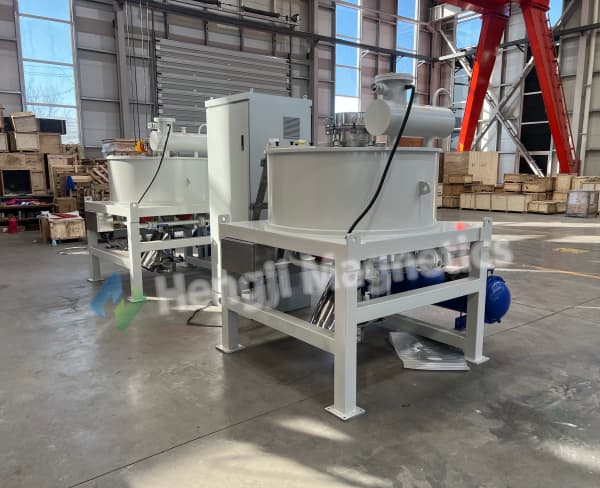
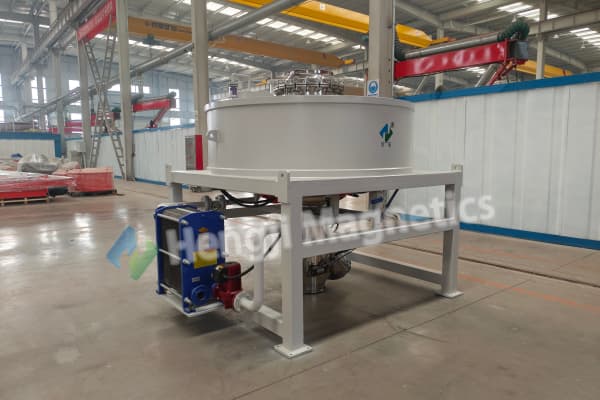
Standard Backwash Operating Procedure
-
Stop Feed: Halt material flow and allow the unit to run empty briefly.
-
De-energize: Ensure the magnet power supply is completely off.
-
Initiate Backwash: Start the automated or manual backwash cycle. Observe the discharge port for the characteristic "puff" of ejected particles.
-
Verify: After the cycle, shine a light through the media canister to check for clarity and any remaining blockages.
-
Resume: Close valves, re-energize the magnet, restart feed.
Emergency Response: When Clogging Has Already Occurred
-
De-energize and lock out completely.
-
Remove the media cartridges or matrix according to the manual.
-
For rod media: Use a non-magnetic brush (e.g., brass) to scrub gaps, followed by high-pressure air from the clean side.
-
For mesh media: Soak in an appropriate cleaning solution (consult your supplier) to dissolve cemented deposits, then rinse and dry thoroughly.
-
Inspect for damage before reinstallation.

-
Upstream Protection: Install a dry magnetic separator with lower intensity ahead of your high gradient magnetic separator to remove highly magnetic particles first.
-
Feed Control: Strictly manage feed moisture and top particle size.
-
Parameter Logging: Track backwash pressure, duration, and differential pressure trends to predict problems before they cause downtime.
The Unsung Hero of EV Batteries: How Magnetic Roller Separators Enable High-Purity Materials
Coil Burnout Prevention: The Essential Daily Checklist for Your Suspended Magnetic Separator
Related Article