Industrial Magnetic Separator for Efficient Magnetic Separation Recycling
2026-05-14
In mining, metallurgy, coal processing, and non-metallic mineral industries, recovering valuable magnetic components while removing harmful impurities is the core challenge for profitability and product quality. An industrial magnetic separator is the key equipment for this purpose. Its performance in magnetic separation recycling directly affects your cost control and resource utilization. This article answers common questions about how these machines help your production.

How Does an Industrial Magnetic Separator Achieve High Recovery in Magnetic Separation Recycling?
Customers often ask: what can be recovered, and what is the recovery rate?
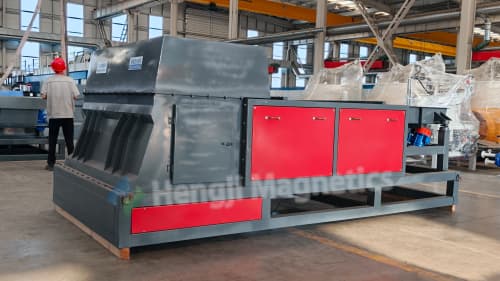
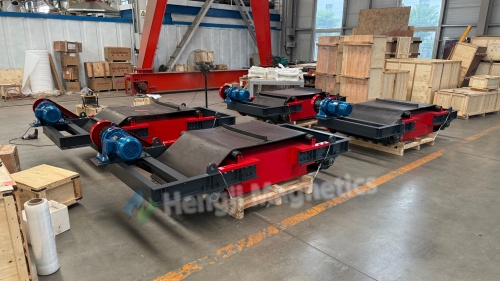
An industrial magnetic separator works by exploiting magnetic differences between minerals. Under the combined action of magnetic force and mechanical forces (gravity, centrifugal force, water flow), magnetic and non-magnetic materials follow different paths and separate. Whether processing wet slurry or dry powder, an industrial magnetic separator effectively captures strongly magnetic minerals like magnetite and pyrrhotite from gangue.
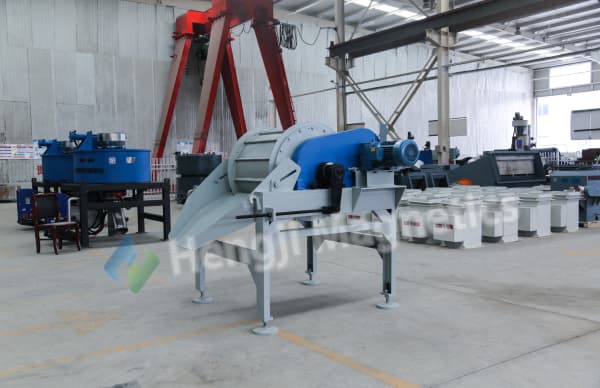
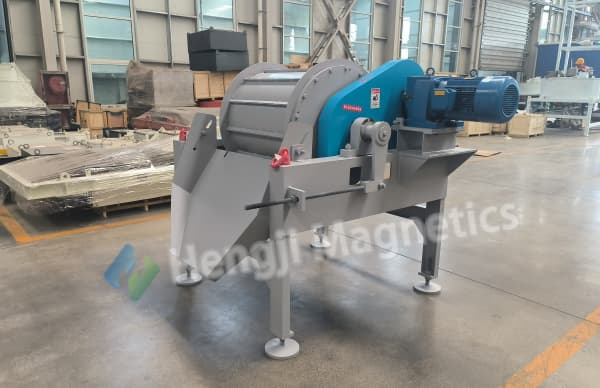
In wet magnetic separation recycling, slurry enters the magnetic field. Strongly magnetic particles attach to a rotating drum surface, are carried out of the field, and rinsed into a concentrate launder. This design ensures high recovery while reducing loss of valuable material to tailings.
How to Ensure Separation Efficiency and Capacity of Your Industrial Magnetic Separator?
Common questions: can the equipment handle large throughput? Is the magnetic field strong enough?
Modern industrial magnetic separator units use high-performance rare earth magnets (e.g., Neodymium). They offer high field strength and deep magnetic penetration. This allows processing coarse material (e.g., 6–0 mm) with high capacity. Whether for roughing, cleaning, or removing strongly magnetic impurities from non-metallic minerals, an industrial magnetic separator runs reliably.
The tank design—concurrent, counter-current, or semi-counter-current—optimizes slurry flow and prevents clogging. Flexible drive configurations suit various site layouts for effective magnetic separation recycling.


What About Durability and Maintenance of an Industrial Magnetic Separator?
Equipment life and maintenance cost are long-term concerns.
Key components—the permanent magnetic drum—are fabricated from stainless steel plate. The precise clearance between drum and magnetic circuit ensures efficient capture. The drum surface is covered with a thick, directly vulcanized rubber layer (several millimeters), providing wear resistance and a service life of 2–3 years. Bearings are lubricated with calcium-based grease; gearboxes use mechanical oil with periodic changes. The compact design of an industrial magnetic separator requires minimal daily maintenance, reducing long-term operating costs for magnetic separation recycling.
Which Industries Benefit Most from Industrial Magnetic Separator in Magnetic Separation Recycling?
Industrial magnetic separator applications cover nearly every field involving magnetic material separation:
-
Ferrous metal mines: Wet separation of magnetite, pyrrhotite, roasted ore, ilmenite to improve concentrate grade.
-
Coal industry: Recovery of magnetite heavy media in coal preparation, and iron removal from coal slime.
-
Non-metallic mineral processing: Iron removal from kaolin, quartz sand, feldspar to enhance brightness and purity.
-
Building materials & chemicals: Iron removal from cement raw materials, ceramic slurries, refractories.
-
Steel & environmental protection: Recovery of magnetic metals from steel slag and metallurgical waste for resource recycling.
All these rely on robust magnetic separation recycling using an industrial magnetic separator.
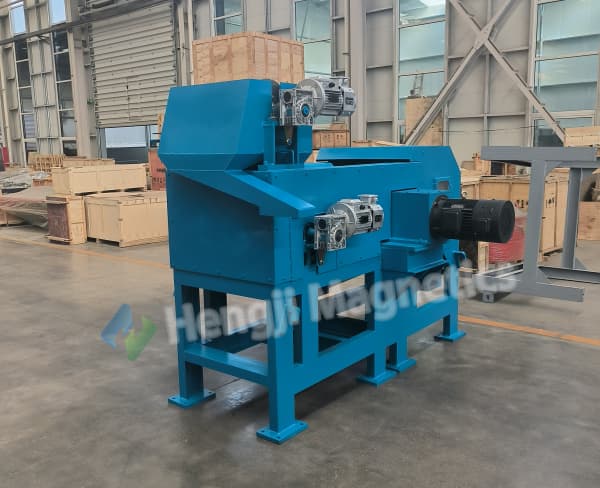
How to Select the Right Industrial Magnetic Separator for Your Magnetic Separation Recycling Needs?
Consider these factors:
-
Material characteristics: Wet slurry or dry powder? Strongly or weakly magnetic? Particle size?
-
Throughput: Choose capacity matching your production rate.
-
Separation precision: Multi-stage circuits may be needed for high recovery or grade.
-
Site conditions: Installation space, power supply, anti-clogging requirements.
An industrial magnetic separator that fits your process ensures optimal magnetic separation recycling.
Conclusion
The industrial magnetic separator is the core equipment for efficient and stable magnetic separation recycling. It helps maximize resource utilization and improve product quality. Whether building a new line or upgrading an existing one, selecting the right industrial magnetic separator is a key step toward cost reduction, efficiency, and green production. For material testing or custom recommendations, consult a specialized manufacturer.
Grain Magnetic Separator: How Magnetic Separating Grates Protect Flour, Rice & Feed Processing
Magnetic Metal Separator Price: Why the Lowest Quote Isn’t Always the Best Value
Related Article
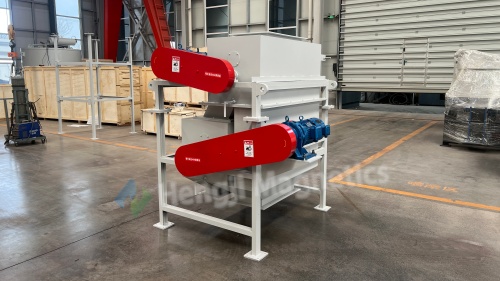
Rare earth dry drum magnetic separator combines rare earth magnetic force with dry processing to remove fine iron from powders, with no demagnetization and low energy use.
Rare Earth Dry Drum Magnetic Separator: Rare Earth-Level Magnetic Force for Dry Processing
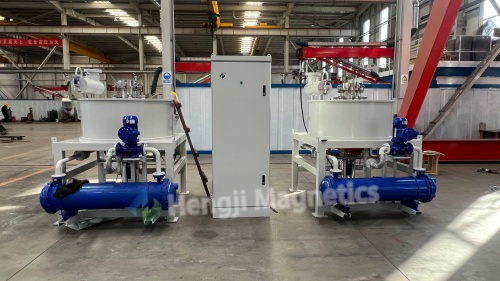
Dry electromagnetic food grade magnetic separators ensure safe, thorough iron removal from food powders with hygienic stainless steel construction and oil-cooled electromagnetic coils.
Food Grade Magnetic Separators and Dry Electromagnetic Separator: Ensuring Safe and Thorough Iron Removal in Food Powders