The Sub-100 Micron Battlefield: How Rare Earth Roll Magnetic Separators Conquer Fine Particle Separation
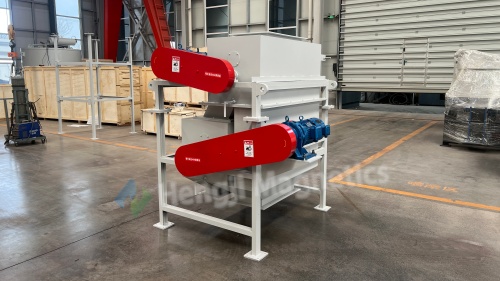
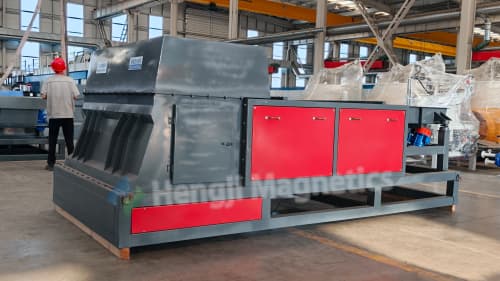
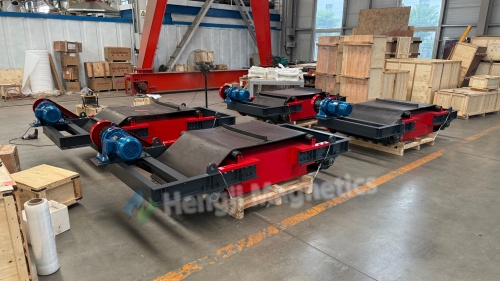
Below 100 microns, conventional magnetic separation hits a wall. Magnetic force drops with particle volume, surface forces dominate, and fluid drag overwhelms inertia. Standard separators simply lack the power to capture these fine, weakly magnetic particles. This is where the rare earth roll magnetic separator becomes the weapon of choice. A perm roll magnetic separator engineered with high-intensity rare earth magnets and precision gradient circuits can selectively capture particles down to the micron scale, turning what was once unrecoverable into valuable concentrate.

The Challenge: Why Fine Particles Defeat Conventional Methods
-
Rapid Magnetic Force Decay: Magnetic force scales with particle volume. Halving the particle diameter reduces the magnetic force by a factor of eight. For micron-sized, weakly magnetic particles, this force becomes comparable to gravity or fluid drag.
-
Massive Surface Area Effects: Fine particles agglomerate easily, sticking to each other and to equipment surfaces through electrostatic and van der Waals forces.
-
Fluid Dynamics Dominance: In wet processing, viscous drag overwhelms particle inertia. Fine particles follow fluid streamlines, making them difficult to divert with magnetic force.
-
High Selectivity Demands: Effective separation requires precise control of magnetic forces at the micron scale to distinguish between minerals with subtle differences in magnetic susceptibility.
The Weapon: Engineered for Microscopic Capture
High-grade Neodymium or Samarium Cobalt magnets generate surface fields exceeding 12,000 Gauss—five to ten times stronger than conventional ferrite magnets. This provides the base energy needed to attract weakly magnetic fine particles.
Instead of simple two-pole designs, the perm roll magnetic separator features dozens of alternating poles densely packed around the roll circumference. As fine particles pass through this rapidly alternating field, they experience repeated magnetization, flipping, and acceleration—dramatically increasing capture probability.
For fine material, pole spacing is minimized. This creates extreme magnetic gradients at pole edges and gaps. The magnetic force on a particle depends not only on field strength but also on the gradient. For tiny particles with small volume, a massive gradient is required to generate meaningful force. The high-gradient circuit of the rare earth roll magnetic separator provides exactly this.


The Battle Plan: Dry and Wet Separation Strategies
Dry Mode: For Fine Powders
-
Applications: High-purity quartz, feldspar, zircon, and advanced ceramic powders.
-
How It Works: A vibratory feeder creates a thin, uniform monolayer of particles falling past the perm roll magnetic separator. Non-magnetic particles follow a natural gravity trajectory. Magnetic particles are deflected by the intense field, captured on the roll surface, or diverted into a separate collection zone. Roll speed, splitter position, and feed parameters are precisely tuned to achieve clean separation.


Wet Mode: For Fine Slurries
-
Applications: Hematite, ilmenite, wolframite recovery; kaolin and spodumene purification.
-
How It Works: Dilute slurry flows in a thin, stable laminar layer over the rare earth roll magnetic separator. Magnetic particles overcome fluid drag and migrate to the roll surface. Non-magnetic particles continue with the slurry flow. Captured material is carried out of the slurry and rinsed off as concentrate. Slurry velocity, concentration, and viscosity must be carefully controlled to allow sufficient magnetic retention time.
Operational Excellence: The Fine Particle Playbook
A properly tuned perm roll magnetic separator achieves remarkable results:
-
Stable separation down to 10-30 microns, with some applications reaching 5 microns.
-
High selectivity between minerals with subtle magnetic differences.
-
Chemical-free, purely physical processing.

The Tuning Secrets:
-
Feed Preparation is Critical: Strict classification and desliming are mandatory. A narrow particle size range prevents coarse particles from interfering and fine slimes from coating surfaces.
-
Dispersion Above All: Whether dry or wet, achieving uniform, monolayer, well-dispersed feed is the single most important success factor.
-
Parameter Interplay: Roll speed, magnetic field strength, splitter position, and wash water pressure must be adjusted together to find the optimum operating point for each material.
-
Multi-Stage Circuits: Single-pass separation rarely achieves final specifications. A rougher-cleaner-scavenger circuit with multiple rare earth roll magnetic separator stages progressively upgrades product quality.
Conclusion: Precision at the Microscopic Scale
Below 100 microns, magnetic separation transforms from brute force to precision engineering. The perm roll magnetic separator equipped with high-intensity rare earth magnets and high-gradient circuits functions as a microscopic magnetic sieve. It does not simply attract particles—it selectively navigates them through a landscape of competing forces. This technology enables the transition from coarse recovery to fine purification, unlocking the value of high-purity industrial minerals and strategic metals that were once lost to tailings. In the battle for the finest particles, the rare earth roll magnetic separator is the decisive weapon.
Dry Magnetic Roller Separator: Solving Stubborn Iron Removal Challenges in Dry Powders
The Battery-Grade Purity Barrier: How an Electromagnetic Wet Magnetic Separator Achieves PPB-Level Iron Control
Related Article