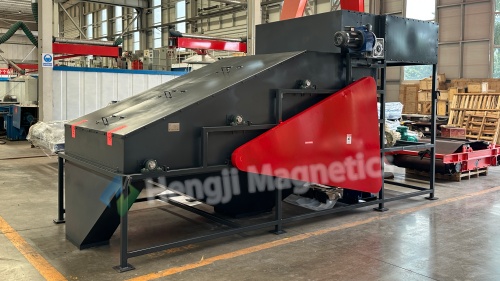
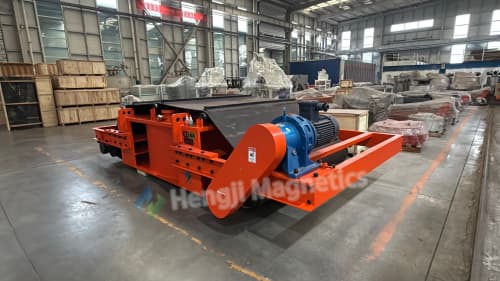
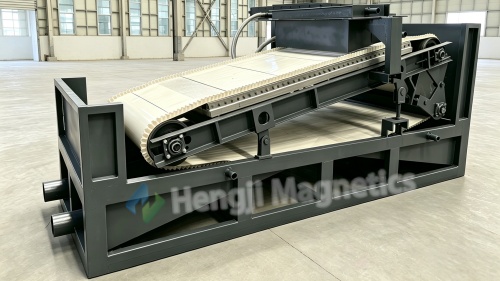
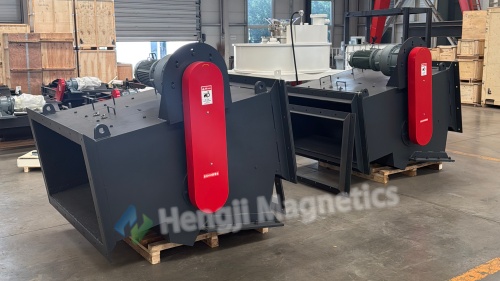
Eddy Current Metal Separator: Precision Magnetic Separation of Metals for Recycling
In recycling industries—municipal waste processing, e-waste dismantling, auto shredder residue, glass cullet, and plastic window recycling—non-ferrous metals like copper and aluminum are often mixed with plastics, glass, wood, and other non-magnetic materials. These valuable metals are difficult to separate effectively, leading to lost revenue and wasted resources. The eddy current metal separator has become the key solution. As one of the most effective technologies for magnetic separation of metals, it uses high-frequency alternating magnetic fields to eject conductive metals, turning waste into valuable resources.
The eddy current metal separator uses differences in electrical conductivity. Its principle is based on two physical phenomena: a time-varying alternating magnetic field always accompanies an alternating electric field, and a current-carrying conductor generates a magnetic field. During operation, a high-frequency alternating strong magnetic field is generated on the separation rotor surface. When conductive non-ferrous metals pass through this field, eddy currents are induced inside the metal. These eddy currents generate a magnetic field opposite to the original field direction. The non-ferrous metal is then propelled forward along the conveying direction by the repulsive force, separating it from non-magnetic materials. The main separation criterion is the ratio of conductivity to density—materials with higher ratios separate more easily. This is why the eddy current metal separator is so effective for magnetic separation of metals.
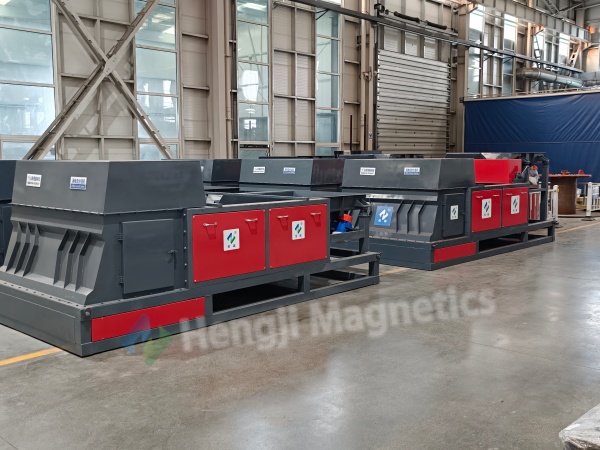
Key Components and Design of Eddy Current Metal Separator
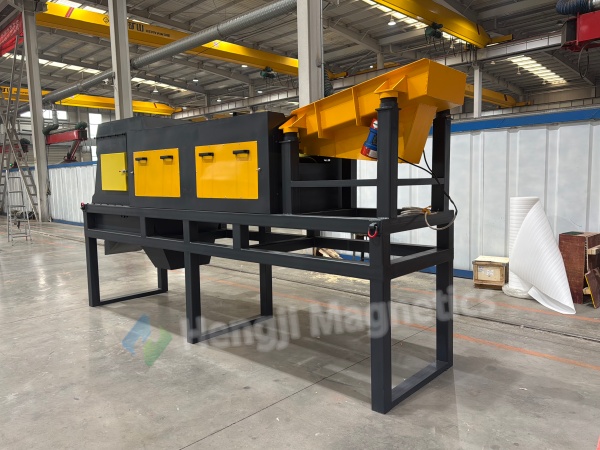
Customer Concerns Solved by Eddy Current Metal Separator
Case Study: Eddy Current Metal Separator in E-Waste Recycling
Important Note: Ferrous Material and Eddy Current Metal Separator
The eddy current metal separator is mainly used to recover copper, aluminum, and other non-ferrous metals from municipal solid waste, industrial waste, e-waste processing, glass cullet, waste plastic doors and windows, boiler bottom ash, and auto shredder residue. It is widely used in waste treatment, waste electrical appliance recycling, and non-ferrous metal processing. Specific applications include e-waste processing (refrigerator dismantling lines), separating aluminum cans and iron metals, separating non-ferrous metals from boiler bottom ash, sorting aluminum or copper blocks from auto shredder residue, separating non-ferrous metals from glass cullet, separating non-ferrous metal impurities in plastic recycling lines, separating non-ferrous metals from plastic window recycling, and separating non-ferrous metals from wood. With high-frequency alternating magnetic field separation, uniform feeding, and adjustable splitter plate, the eddy current metal separator is solving real challenges in magnetic separation of metals.
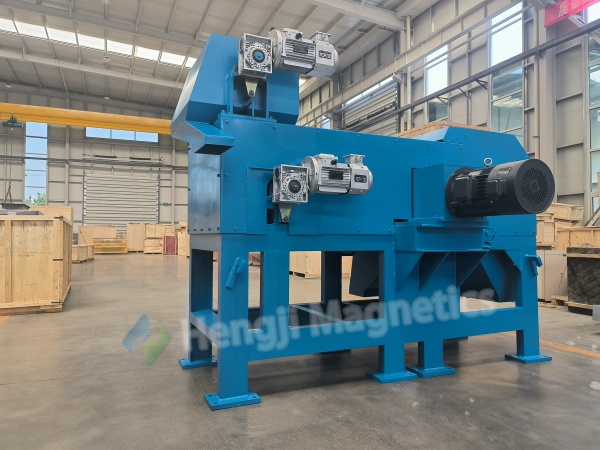
Why Choose Eddy Current Metal Separator for Magnetic Separation of Metals
Dry Drum Iron Ore Magnetic Separator: Improve Feed Grade & Reduce Costs in Dry Pre-Concentration
Related Article