
Permanent Magnetic Drum Separator and Permanent Wet Magnetic Separator for Slurry Iron Removal
2026-11-17
Iron ore concentrators, non-metallic mineral processing plants, building materials plants, and coal washing plants all face a common problem: fine iron powder and fine magnetite in slurry are difficult to handle. The particles are small and travel with the water. Gravity and screens cannot stop them. Poor recovery means loss of both concentrate grade and recovery rate. The permanent magnetic drum separator and the permanent wet magnetic separator are designed for these conditions. They use permanent magnets as the magnetic source. The drum surface attracts and carries strongly magnetic minerals out of the slurry. Hengci Magnetic has extensive experience in magnetic circuit design and on-site commissioning for this equipment. This article explains magnetic strength selection, slurry flow in the tank, water and magnetic angle adjustment, structural details, a field case, installation, maintenance, and safety.
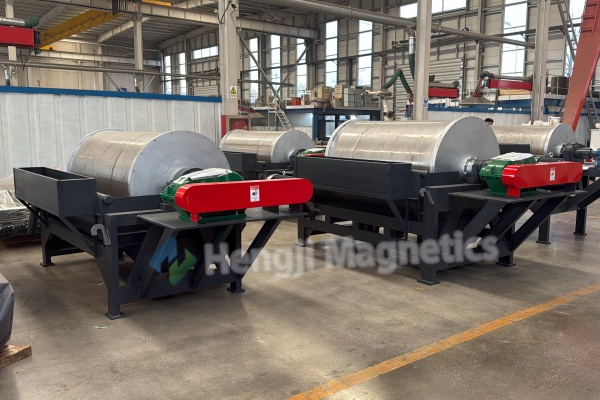
How the Permanent Magnetic Drum Separator Selects Magnetic Strength
Standard and Special Field Strength Grades
Customers first ask how high the magnetic strength should be and whether it can be matched to the material. The permanent magnetic drum separator uses high-performance strong magnetic materials in a composite magnetic circuit. It provides high field strength, deep magnetic penetration, and no demagnetization after years of use. Drum surface field strength covers a wide range. Standard models provide 150 to 250 mT. Special models provide 300 to 600 mT. Custom values are also available. This means the same series can match different duties. Weakly magnetic fine magnetite and roasted ore need a stronger field. Easily separated coarse strongly magnetic material can use a milder configuration. This avoids carrying non-magnetic particles into the concentrate. The permanent wet magnetic separator therefore offers flexible selection for different slurries.
Matching the Permanent Wet Magnetic Separator to the Ore
For fine magnetite, a stronger field helps capture fine particles. For coarse material, a lower field can reduce entrainment. The permanent wet magnetic separator should be selected based on ore type, feed particle size, slurry density, and iron grade requirement. A field that is too low loses magnetic iron. A field that is too high may carry non-magnetic material. Proper selection is the first step toward stable grade and recovery.
How the Permanent Wet Magnetic Separator Separates Slurry in the Tank
Slurry Flow and Magnetic Capture
Understanding how slurry is separated in the tank is key. Slurry enters the feed box through a flange. It is initially diluted by the feed water pipe. Then the spray pipe washes it to the lower part of the permanent magnetic drum. The rotating drum separates the slurry into concentrate and tailings. Concentrate is rinsed into the concentrate box through the concentrate pipe. Adjust the concentrate pipe working pressure so that the concentrate is rinsed clean. Concentrate and tailings flow out from the lower outlets. In magnetic terms, when slurry enters the magnetic zone, strongly magnetic minerals are attracted to the drum surface. Weakly magnetic and non-magnetic minerals are washed out by water flow. The magnetic minerals on the drum surface are carried out of the magnetic zone and rinsed into the concentrate launder. This completes the separation. The permanent magnetic drum separator therefore performs continuous separation in the tank.
Tank Design and Feed Box Flow
The tank of the permanent wet magnetic separator is specially designed to resist clogging and material loss. The feed box includes structures that generate proper slurry flow. This improves magnetic mineral recovery. The tank and feed box work together to stabilize the slurry flow. The permanent magnetic drum separator then captures magnetic particles more effectively.
Adjusting Water Flow and Magnetic Angle
Concentrate Pipe Pressure and Washing
Water flow and magnetic angle are common field adjustment points. The concentrate pipe working pressure should be adjusted so that the concentrate is rinsed clean. If the pressure is too low, concentrate may carry material. If the pressure is too high, discharge may be incomplete. The permanent wet magnetic separator should be checked during commissioning. Adjust the water flow until the concentrate is clean and the tailings are free of magnetic iron.
Magnetic Angle Adjustment for Better Discharge
The magnetic angle adjustment device changes the magnetic system angle. Turn the nut on the pull rod. The pull rod turns the shaft. The magnetic system fixed on the shaft then rotates. A well-adjusted angle places the magnetic material discharge point in the right position. The permanent magnetic drum separator should be adjusted according to site conditions. This improves concentrate discharge and reduces carryover.
Structural Details for Durability
Drum Shell, Magnetic Gap, and Drive
Several structural details determine durability. The permanent magnetic drum is the key component. It consists of a drum shell, permanent magnetic system, end covers, shaft, bearing housings, and bearings. The drum shell is rolled from stainless steel plate. It is supported on the shaft through end covers, bearing housings, and bearings. The gap between the drum and the magnetic system is not more than 4 mm. The drive uses a cycloidal gearmotor, sprocket, chain, and drive shaft connected to the drum. This drives the drum rotation. The permanent wet magnetic separator therefore delivers stable rotation and reliable magnetic transmission.
Rubber Lining and Continuous Operation
The drum surface rubber is directly vulcanized instead of bonded. The vulcanized layer uses high-wear rubber. Thickness is 1 to 4 mm. Service life is 2 to 3 years. The equipment can feed and discharge continuously. It provides high magnetic strength, high magnetic gradient, and a large working gap. It has high throughput capacity and can be connected in series with multiple units. The permanent magnetic drum separator is therefore suitable for continuous production.
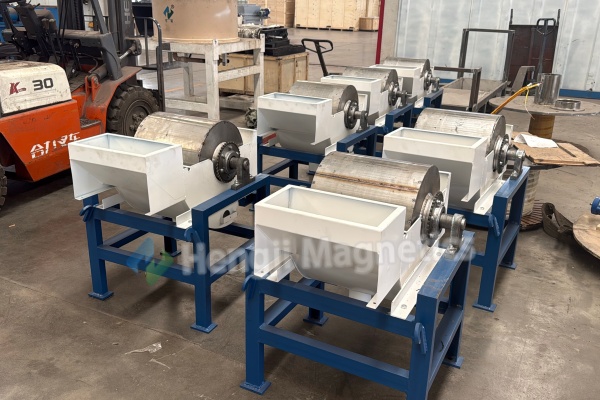
Case Study: Permanent Wet Magnetic Separator in Iron Ore Processing
Reducing Carryover and Tailings Loss
An iron ore concentrator processed fine strongly magnetic iron ore. The old equipment carried non-magnetic material into the concentrate and lost iron to tailings. Operators had to adjust water frequently. Feed density was unstable. Separation performance fluctuated. Hengci Magnetic supplied a permanent wet magnetic separator for this duty. The drum magnetic strength was selected according to the ore sample. The concentrate pipe pressure was adjusted to rinse the concentrate clean. The feed water pipe and splitter in the feed box diluted and distributed the slurry. Slurry density entering the magnetic zone became more stable. The magnetic angle was adjusted according to site conditions. After commissioning, concentrate carryover and tailings iron loss both decreased. The frequency of water adjustment dropped. This case demonstrates the value of the permanent magnetic drum separator and permanent wet magnetic separator in real production.
Installation, Commissioning, and Maintenance
Pre-Installation Checks and Trial Run
Before installation, check all parts for damage, deformation, or corrosion. The frame should be level. End flatness should not exceed 2 mm. Adjust the gap between the tank and the drum according to throughput. No-load trial run should last at least one hour. Confirm smooth operation, no gearbox oil leakage, and bearing temperature rise not exceeding 60°C. Then run under load. Feed density should not be lower than 10%. Feed rate should not exceed half of the rated capacity. Run for two hours before full load operation. Before startup, check that the feed water pipe, spray pipe, and concentrate pipe are clear. Check oil levels in bearings and gearboxes. Check bolts for looseness. Check the tank for objects that may obstruct drum rotation. Start with a small feed and increase to full load after normal operation. When stopping, stop the feed first and drain the material before shutting down. These steps keep the permanent wet magnetic separator reliable.
Lubrication and Safety
Bearings at both ends of the permanent magnetic drum should use No. 2 to No. 4 calcium-based grease. Apply grease once a month. Fill two-thirds of the space. Do not over-grease. The gearbox should use No. 40 or No. 50 mechanical oil. Do not exceed the oil level indicator. Change and clean the oil every six months. A strong magnetic field is present around the permanent magnetic drum separator. Do not place watches or instruments nearby. Operators must not carry sharp ferrous tools or objects close to the unit. These precautions prevent injury.
Conclusion: Choose the Right Permanent Magnetic Drum Separator and Permanent Wet Magnetic Separator
Selecting a permanent magnetic drum separator and permanent wet magnetic separator means matching mineral type, feed particle size, slurry density, iron grade requirement, and single-shift throughput. Provide these details to Hengci Magnetic. We will configure the magnetic strength grade, tank type, magnetic angle, and water flow method. With the right permanent magnetic drum separator and permanent wet magnetic separator, fine magnetic iron is captured before it reaches the tailings. Concentrate grade stabilizes, recovery improves, and water adjustment becomes less frequent.
Eddy Current Metal Separator: Efficient Eddy Current Waste Separation for Copper and Aluminum Recovery
Dry Permanent Magnetic Drum Separator: Controlling Tailings and Improving Grade in Dry Pre-Concentration
Related Article
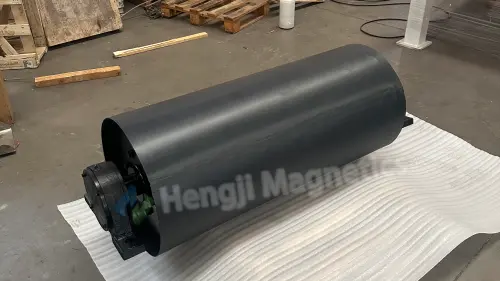
The magnetic pulley permanent magnetic separator captures tramp iron buried under thick material layers using rotary magnetic force, with low energy use and reliable conveyor protection.
Magnetic Pulley Separator and Permanent Magnetic Separator for Iron Removal Under the Material Layer
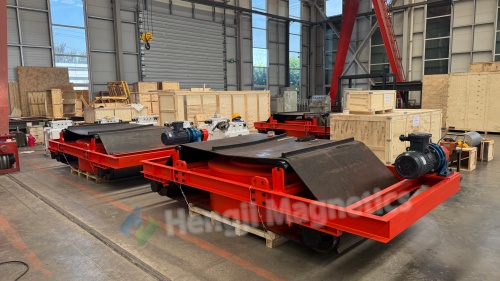
The cross belt electro magnetic separator combines cross belt and electromagnetic separation to remove tramp iron from conveyor belts with correct positioning and automatic discharge.
Cross Belt Electro Magnetic Separator: Correct Positioning to Stop Tramp Iron from Slipping Through
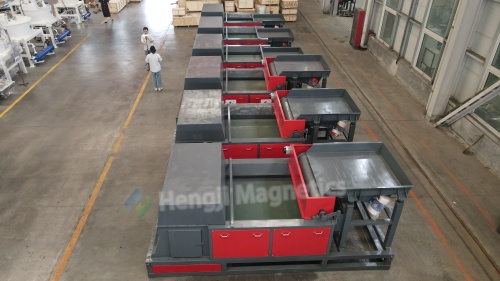
The eddy current metal separator uses eddy current waste separation to recover copper and aluminum efficiently from mixed waste while protecting the belt from ferrous damage.
Eddy Current Metal Separator: Efficient Eddy Current Waste Separation for Copper and Aluminum Recovery
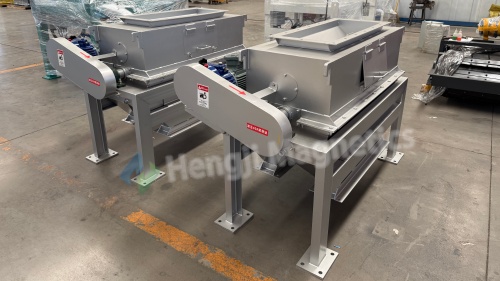
The dry permanent magnetic drum separator combines strong permanent magnetic force and flexible splitter control to reduce tailings loss and stabilize grade in dry powder and iron ore pre-concentration.
Dry Permanent Magnetic Drum Separator: Controlling Tailings and Improving Grade in Dry Pre-Concentration