High Gradient Magnetic Separator Explained: Dry Magnetic Separator or Wet Magnetic Separator?
Choosing the right separation technology is critical for optimizing mineral recovery, product purity, and operational cost. When it comes to high-intensity processing, the decision often centers on a dry magnetic separator versus a wet magnetic separator. Both are powerful forms of a high gradient magnetic separator, but they serve fundamentally different purposes. This guide will clarify their core distinctions—from working principles to ideal applications—to help you make the perfect choice for your operation.

The Core Distinction: Working Medium and Separation Mechanics
-
Dry Magnetic Separator: Processing in Air
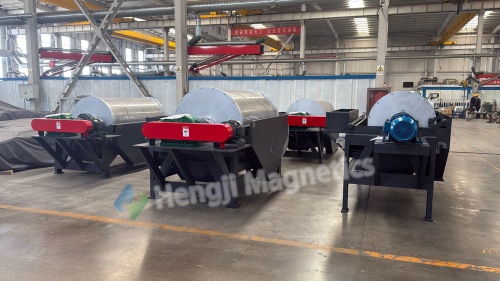
A dry magnetic separator operates with air as its medium. It's designed for free-flowing powders and granular materials. Material is fed via gravity, vibration, or air conveyance through a high-intensity magnetic field. Magnetic particles are captured by the magnetic drum or plate, while non-magnetic material continues on its trajectory. This makes the dry magnetic separator ideal for simple, water-free impurity removal. -
Wet Magnetic Separator: Processing in Slurry
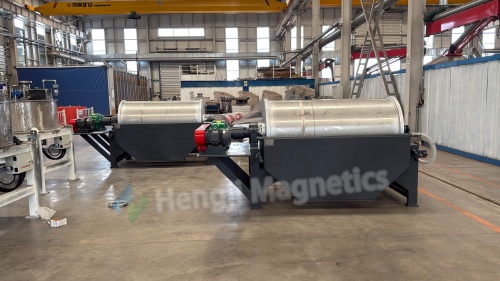
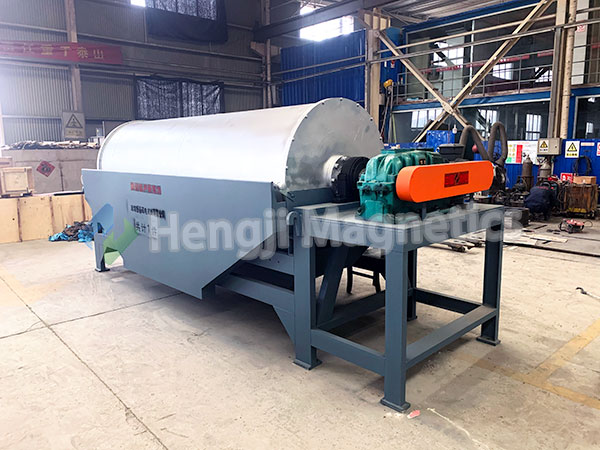
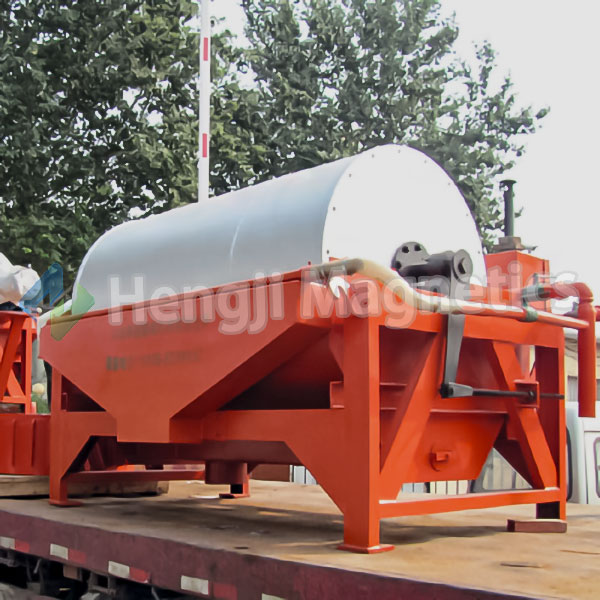
A wet magnetic separator uses water or a prepared slurry as its medium. It processes fine particles suspended in liquid. The slurry flows through a tank where a magnetic drum rotates. Magnetic particles are attracted to the drum, carried out of the slurry pool, and rinsed off with clean water. Non-magnetic particles are carried away by the fluid flow. This method makes the wet magnetic separator superior for recovering fine, weakly magnetic minerals.


Structural Design: Built for Different Worlds
Key Components of a Dry Magnetic Separator:
-
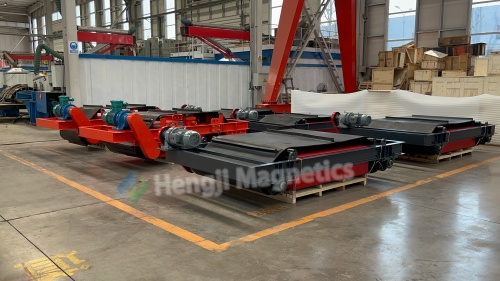
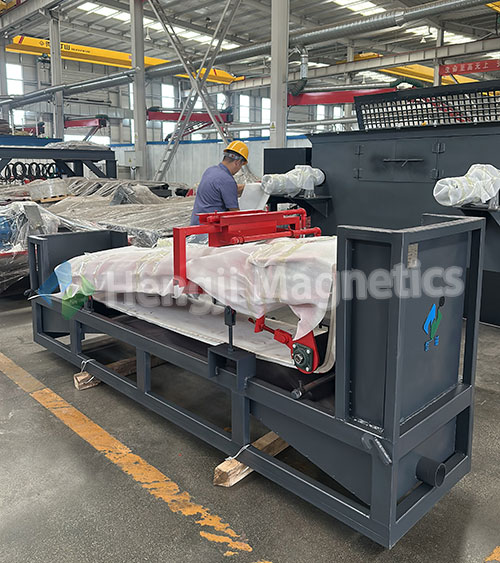
Magnetic Drum/Plate & Conveyor Belt: The core assembly often features a powerful magnetic roller and a conveyor belt to transport material through the field.
-
Feeding System: Typically employs vibratory feeders for even, controlled material distribution across the belt width.
-
Discharge Method: Relies on mechanical force—like scrapers, centrifugal action, or a reverse belt—to remove captured magnetic material. No process water is needed.
-
Sealing Focus: Designed for robust dust protection to keep abrasive particles away from bearings and moving parts.
Key Components of a Wet Magnetic Separator:
-
Magnetic Drum & Tank Assembly: The heart of the system. The tank design (counter-current, concurrent, or semi-counter-current flow) is crucial for determining separation efficiency and concentrate grade.
-
Feed & Water System: Includes a feed box, regulating valves, and spray pipes to control slurry density, flow rate, and rinse water pressure.
-
Discharge Method: Absolutely requires pressurized rinse water to efficiently flush the magnetic concentrate from the drum surface.
-
Sealing Focus: Engineered for complete waterproofing. Critical seals and epoxy-encapsulated magnets prevent water ingress and protect the magnetic system from corrosion.
Application Scenarios: Where Each High Gradient Magnetic Separator Excels
Ideal Applications for a Dry Magnetic Separator:
-
Materials: Dry powders and granules where adding water is unacceptable or impractical.
-
Typical Industries & Uses:
-
Non-Metallic Mineral Purification: Removing iron impurities from quartz, feldspar, kaolin, abrasives.
-
Ceramics & Refractories: Purifying raw materials like zircon sand and bauxite.
-
Food, Feed, & Chemicals: Ensuring product purity by removing tramp metal.
-
-
Key Advantages: Zero process water consumption, no slurry handling or settling ponds, simpler installation, and lower operational costs. Perfect for arid regions.
Ideal Applications for a Wet Magnetic Separator:
-
Materials: Fine-particle slurries, especially those containing weakly magnetic minerals.
-
Typical Industries & Uses:
-
Metal Ore Processing: The primary application for concentrating hematite, limonite, manganese, ilmenite, and other weakly magnetic ores.
-
Coal Processing: Heavy media recovery (magnetite or ferrosilicon) and coal washing.
-
High-Purity Non-Metallic Processing: Deep iron removal for ultra-fine products like high-purity quartz and kaolin.
-
-
Key Advantages: Superior recovery of fine particles (often below 200 mesh), higher concentrate grades, and excellent separation efficiency due to the dispersive and fluidizing nature of water.

Operational Performance and Maintenance
-
Dry Magnetic Separator Operation:
-
Control: Adjust feed rate, vibration, belt speed, and magnetic angle for optimization.
-
Maintenance: Focuses on belt tracking, bearing lubrication, and cleaning dust buildup. Generally straightforward.
-
-
Wet Magnetic Separator Operation:
-
Control: More parameters to manage: feed density, slurry level, drum speed, and rinse water pressure for precise control.
-
Maintenance: Involves checking for wear in tanks and pipes, ensuring spray nozzles are clear, maintaining pump seals, and using water-resistant grease on bearings.
-

Your Selection Guide: Dry Magnetic Separator vs. Wet Magnetic Separator
-
Assess Material State: Is your feed material dry or a slurry? This is the first and most critical filter.
-
Define Your Goal: Is the aim simple impurity removal (dry magnetic separator) or mineral concentration and high-grade recovery (wet magnetic separator)?
-
Consider Product Requirements: Must the final product be dry? Does it feed into a wet process? A dry magnetic separator preserves dryness; a wet magnetic separator outputs a concentrate slurry.
-
Evaluate Site & Process: Do you have water availability and a water treatment system? A dry magnetic separator offers a simpler, more compact plant layout.
-
Understand Particle Size & Magnetism: For coarse, strongly magnetic materials, a dry magnetic separator is effective. For fine or weakly magnetic particles, a wet magnetic separator is almost always necessary for high recovery.
Conclusion: Matching Technology to Your Task
Engineering Peak Cooling: How Oil-Cooling Technology Ensures Stability in High-Power Electro Overband Magnets and Suspended Electro Magnets
Graphite Purity Breakthrough: Dry High Intensity Magnetic Separator Testing Delivers Results
Related Article