Aluminum Cans, Copper Wire, Circuit Boards: How Eddy Current Magnetic Separators Extract Value from Waste
Hidden within mountains of shredded scrap lies a fortune. Aluminum cans, copper wiring, and metal-rich circuit board fragments are not waste—they are valuable urban ore waiting to be mined. The challenge has always been how to extract them efficiently from a chaotic mix of plastic, glass, rubber, and other debris. The answer is a remarkable piece of physics in action: the eddy current magnetic separator. This technology, often referred to as an eddy current metal separator, uses powerful magnetic fields to literally throw non-ferrous metals out of the waste stream, transforming trash into treasure.

The Magic of Physics: How Eddy Current Separation Works
Recovering Aluminum Cans: The Efficiency Champion
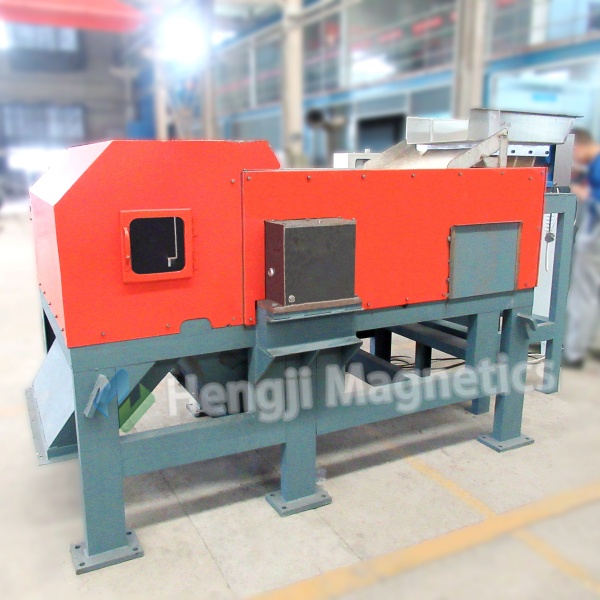
The mixed stream is fed evenly onto a high-speed conveyor belt. As it passes over the eddy current magnetic separator rotor, aluminum fragments experience a powerful lateral ejection force. They literally leap across an air gap into a dedicated collection bin. The non-metallic materials, unaffected by the field, simply fall straight down.
Separation purity routinely exceeds 95% at throughputs of several tons per hour. This is the workhorse technology that makes aluminum recycling economically viable.
Recovering Copper Wire: Capturing High Value
Copper wire is often insulated or tangled. Effective separation requires pre-shredding to liberate the copper core from its plastic jacket. Once liberated, the eddy current magnetic separator performs brilliantly.
Shredded material passes the rotor. Clean copper granules and wire pieces are forcefully ejected, separating cleanly from plastic insulation and rubber fragments. The technology recovers even fine copper particles that would be lost to other methods.
Circuit Board Recycling: Precision Separation
Circuit boards must be shredded and milled to liberate metal from the epoxy and fiberglass substrate. The resulting powder is a complex mixture.
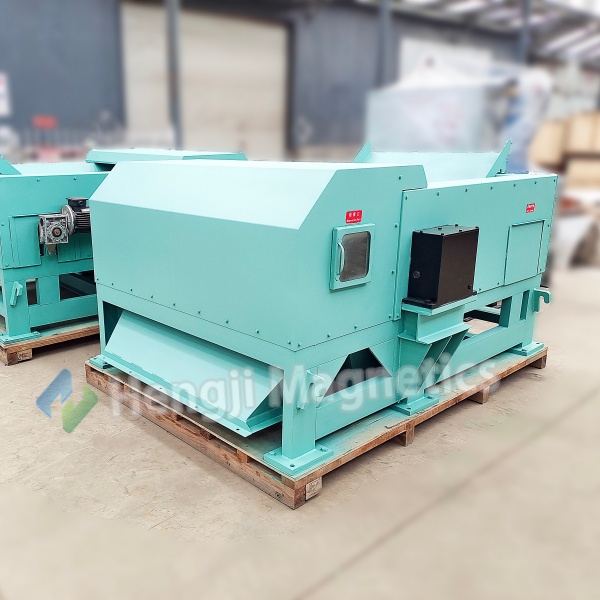
An eddy current metal separator performs a rough split, ejecting all conductive metals (copper foils, aluminum heat sinks, component leads) into a mixed metal concentrate. This dramatically upgrades the feed for subsequent processes like electrostatic separation or density separation.
Eddy current separation enables a clean, chemical-free approach to e-waste processing, replacing environmentally damaging burning or acid leaching with a purely physical method.
From Trash Pile to Treasure Chest: The Complete Process Line
-
Size Reduction: Shredders break down bulky items to liberate materials.
-
Screening: Trommels or vibrating screens classify material by size, optimizing feed for the eddy current metal separator.
-
Ferrous Removal: Powerful magnets remove all ferrous metals. This is absolutely mandatory—iron would be attracted to the rotor, damaging the eddy current magnetic separator.
-
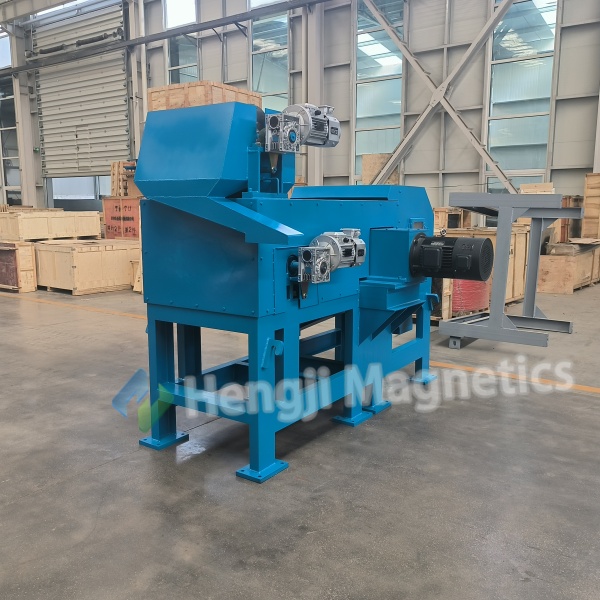
Eddy Current Separation (The Core): The prepared, de-ironed stream meets the rotor, and non-ferrous metals are ejected.
-
Polishing: Ejected metals may pass through a second eddy current metal separator for final purification.

Why Eddy Current Technology is the Ultimate Prospecting Tool
-
Exceptional Efficiency: Achieves high purity and recovery at industrial throughputs.
-
Environmentally Clean: A purely physical process—no water, no chemicals, no secondary pollution.
-
Economically Compelling: Low operating costs, high automation, and direct revenue generation from recovered metals.
-
Remarkably Adaptable: Rotor speed, belt speed, and splitter positions can be tuned to optimize recovery for different materials and particle sizes.
Conclusion: The Magnetic Eye for Urban Mining
Bigger is Not Always Better: Matching Drum Diameter to Capacity in Dry Drum Magnetic Separators
How Much Magnetic Strength Remains After Five Years? Field Testing Your Drum Magnetic Separator
Related Article