Overbelt Magnetic Separator: Continuous Iron Removal in Industrial Magnetic Separation
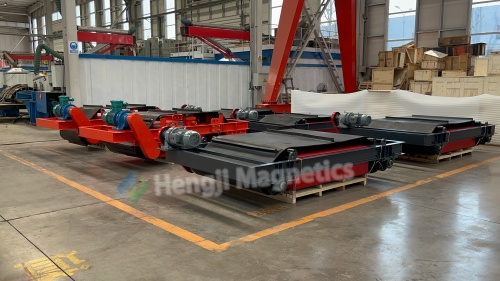
On production lines in power generation, coal mining, mineral processing, and building materials, conveyor belts move massive volumes of bulk material at high speeds. Within these thick material layers, ferrous contaminants from mining and crushing processes—from tiny bolts to heavy excavator teeth—pose not only product quality risks but also serious threats of belt rips and crusher damage. In such high‑throughput, continuous operations, the overbelt magnetic separator has become an essential tool for magnetic separation in industry. This article explores how its self‑cleaning design, deep magnetic penetration, and mechanical reliability address customer concerns about continuous iron removal and long‑term stability.

How Does an Overbelt Magnetic Separator Work for Continuous Industrial Magnetic Separation?

How Does an Overbelt Magnetic Separator Achieve Deep Magnetic Penetration?
What Ensures Mechanical Reliability of an Overbelt Magnetic Separator in Harsh Environments?
-
Self‑tracking drum: The discharge drum has a crowned (convex) profile that automatically corrects belt misalignment, reducing edge wear and discharge failure.
-
Rubber scraper: A scraper integrated with the endless belt at the discharge end prevents captured iron from re‑entering the magnetic zone, protecting the belt and preventing flying debris.
-
Sealed bearings: Key bearings use cast steel housings with full sealing against dust ingress.

Which Applications Need Overbelt Magnetic Separator Technology?
-
Coal handling: Removing bolts, drill bits, and steel scrap from run‑of‑mine coal to protect crushers and pulverizers.
-
Aggregate and gravel: Extracting rebar and steel fragments from crushed stone to protect screens and conveyors.
-
Cement production: Capturing wear‑resistant steel balls and broken mill liners from raw material and clinker lines.
-
Recycling and waste processing: Separating ferrous metals from shredded construction waste, C&D debris, and industrial scrap.
-
Mining and ore processing: Pre‑concentration by removing large tramp iron before primary crushers and downstream processing.


How to Maximize Overbelt Magnetic Separator Performance?
-
Correct suspension height: Keep the magnet face as low as possible without touching material to maximize field strength at the burden surface.
-
Belt speed matching: Ensure the discharge belt speed is properly synchronized with the main conveyor speed for efficient iron ejection.
-
Regular scraper inspection: Check the rubber scraper for wear and replace it before it fails to maintain clean discharge.
-
Field strength check: For electromagnets, monitor excitation current and confirm cooling systems are functioning. For permanent units, use a Gauss meter annually.
-
Belt tracking observation: Check the discharge belt weekly for signs of drift and adjust the tracking mechanism promptly.
Conclusion: The Automated Guardian of Industrial Magnetic Separation
Induced Roll Magnetic Separator: The Powerful Tool for Magnetic Particle Separation in Weakly Magnetic Minerals
Magnetic Pulley Separator for Ore Magnetic Separation: Boosting Precision and Throughput
Related Article