Magnetic Drum Separators for Dry Magnetic Separation of Iron Ore: Process Breakthroughs for Arid and Challenging Environments
2026-06-13
In the arid mining regions of Australia, the high‑altitude mines of Chile, and the freezing zones of Siberia, water scarcity imposes severe constraints on traditional wet beneficiation.
The demand for dry magnetic separation of iron ore has grown significantly under these global resource and climate pressures. Magnetic drum separators play an irreplaceable role in this field.
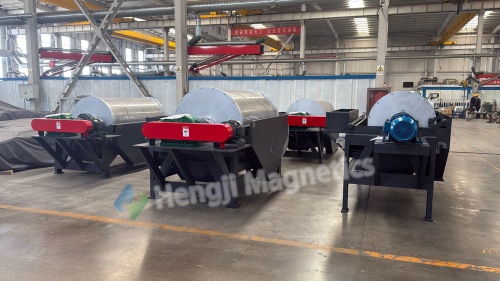
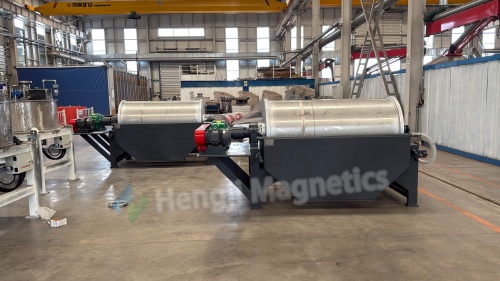
Their working principle is based on a rotating permanent magnetic drum. After crushing and screening, lump or fine iron ore is fed uniformly by a vibratory feeder or belt conveyor into the separation zone of the magnetic drum separator.

Strongly magnetic mineral particles are instantly attracted to the rotating drum shell by the powerful field generated by the internal high‑intensity permanent magnetic system. They are carried out of the field and, in the non‑magnetic zone, fall by gravity or are scraped into the concentrate launder.
Non‑magnetic gangue—quartz, feldspar—is thrown tangentially by gravity and centrifugal force into the tailings chute. This seemingly simple process involves precise trade‑offs in magnetic circuit design, drum construction, and feed control, making the magnetic drum separator an ideal choice for industrial dry magnetic separation of iron ore.
How Do Magnetic Drum Separators Handle Wide Particle Size Ranges and Complex Ores in Dry Magnetic Separation of Iron Ore?
For dry magnetic separation of iron ore, international customers focus on the equipment’s ability to handle varying particle sizes and complex ore types. Ore properties differ greatly across deposits—from clay‑rich hematite in South America to highly weathered limonite in Africa, and from magnetite‑rich lump ore with fine dust in Northern Europe. How can one magnetic drum separator handle such diversity?
Dry separation is sensitive to moisture and fines. When ore has slight surface moisture or clay, adhesion can cause non‑magnetic gangue to be carried into the concentrate, lowering grade. When fines content is high, fine particles may become airborne and disrupt the separation zone. Advanced magnetic drum separators are specifically optimized for these challenges. The magnetic circuit is computer‑simulated, with precise pole arrangement to create a high‑gradient, uniform field on the drum surface. This allows magnetic flux to penetrate a reasonable bed depth.
For the 5‑30 mm coarse ore typical in dry processing, the feed system is specially designed. Operators adjust the amplitude and frequency of the vibratory feeder to achieve a thin, uniform monolayer, preventing the bottom layer from being shielded from the magnetic field. Drum speed is also adjustable. When processing ore with higher moisture or clay, slower speed increases retention time, improving capture precision. For dry, clean lump ore, higher speed boosts throughput. This ability to adapt to multiple ore conditions with one magnetic drum separator is a common need for customers mining in different environments. It allows the dry magnetic separation of iron ore process to find the optimal balance between capacity and concentrate grade.


What About Mechanical Reliability and Magnetic Longevity in Harsh Dry Environments?
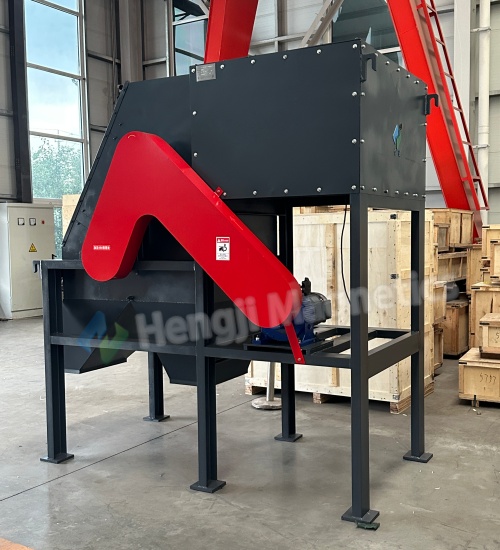
For international customers, the long‑term mechanical reliability of magnetic drum separators is equally critical. Many overseas operators face the reality that after months of operation, drum surface wear degrades separation, or magnetic strength decays due to dust and humidity. Both directly affect stability and return on investment.
In dry magnetic separation of iron ore, the drum shell is in direct contact with abrasive iron ore. Its wear resistance determines service life. Premium magnetic drum separators use high‑strength stainless steel shells, and for highly abrasive ores, a thick vulcanized rubber layer can be added, extending replacement cycles several times.
The internal magnetic circuit is completely sealed inside an enclosed chamber, isolated from dust, ore particles, and high humidity. This protects the rare earth permanent magnets from environmental attack, ensuring stable field output for eight to ten years. The drive system uses a direct‑coupled gearmotor or chain drive—compact, smooth, low‑failure. A well‑manufactured magnetic drum separator operates reliably for years under heavy dry magnetic separation of iron ore duty, reducing downtime and maintenance costs.
Which International Applications Benefit Most from Magnetic Drum Separators in Dry Magnetic Separation of Iron Ore?
Magnetic drum separators are now widely used in dry magnetic separation of iron ore across the globe.
-
Australia (Pilbara region): Pre‑concentration of hematite‑goethite ores before grinding. Discarding 20‑40% of waste rock early saves energy and water.
-
Chile (high‑altitude copper‑iron deposits): Removing magnetite from copper flotation tailings, recovering additional iron value without extra water.
-
South Africa (manganese‑iron mixed ores): Upgrading low‑grade iron fractions by dry magnetic separation, reducing transport costs of waste.
-
Russia (Kursk Magnetic Anomaly): Processing magnetite quartzite in freezing conditions where wet plants would freeze.
-
Middle East and North Africa: Dry processing of iron ore fines where fresh water is prohibitively expensive.
In each case, the magnetic drum separator enables dry magnetic separation of iron ore with zero water consumption, low energy, and minimal environmental footprint.
How to Maximize Performance of Magnetic Drum Separators for Dry Magnetic Separation of Iron Ore?
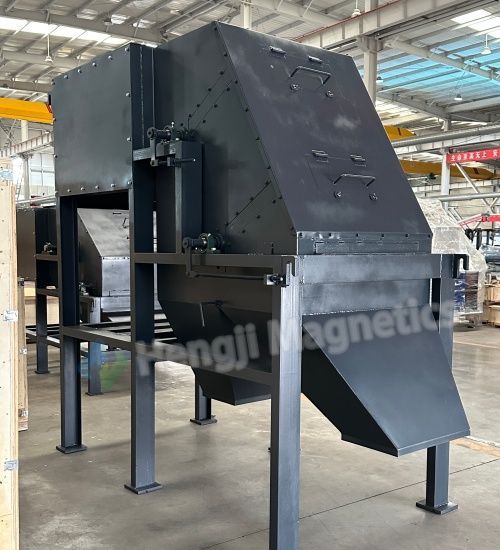
Field experience from successful dry magnetic separation of iron ore plants suggests the following best practices for magnetic drum separators:
-
Feed preparation: Screen to remove extreme fines (<1 mm) and oversize (>50 mm) before the drum. A narrow particle size range improves separation sharply.
-
Moisture control: If feed moisture exceeds 5‑6%, consider a thermal dryer or blending with dry material. High moisture kills dry separation.
-
Thin‑layer feeding: Adjust vibratory feeder to produce a monolayer or just a few particles deep. Thick beds bury magnetic particles.
-
Speed tuning: Start at medium speed, then adjust based on tailings inspection. Increase speed if tailings are clean; decrease if magnetite is escaping.
-
Regular inspection: Check drum rubber for wear monthly. Measure field strength with a Gauss meter every six months. Clean the discharge chute daily.

Conclusion: The Green Workhorse for Global Dry Iron Ore Processing
Magnetic drum separators have proven themselves as the workhorse for dry magnetic separation of iron ore across every continent. With computer‑optimized magnetic circuits, adaptable feed systems, robust wear protection, and sealed magnet assemblies, they deliver high recovery and high grade without a single drop of water. For mines facing water scarcity, freezing conditions, or strict environmental regulations, the magnetic drum separator is not just an option—it is the solution.
Choose a magnetic drum separator engineered for your specific ore type and site conditions. Embrace dry magnetic separation of iron ore as a sustainable, profitable path to concentrate production. Let the drum separator be the dry “heart” of your beneficiation line.
Magnetic Pulley Separator for Ore Magnetic Separation: Boosting Precision and Throughput
Magnetic Ore Separator: Process Insights from Magnetic Separation Examples
Related Article
Rotary wet drum magnetic separator combines rotary and wet drum designs for continuous slurry separation, improving concentrate grade and reducing magnetic iron in tailings.
Rotary Drum Magnetic Separator and Wet Drum Magnetic Separator: Continuous Slurry Separation

High intensity dry magnetic drum separator combines strong magnetic force with dry processing, removing fine iron from powders without demagnetization.
High Intensity Dry Magnetic Drum Separator: Strong Magnetic Force for Dry Powder Iron Removal