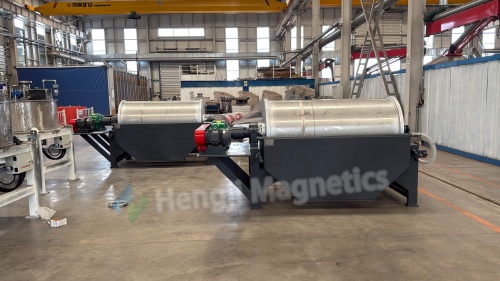
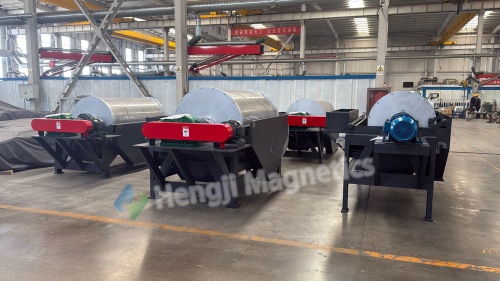
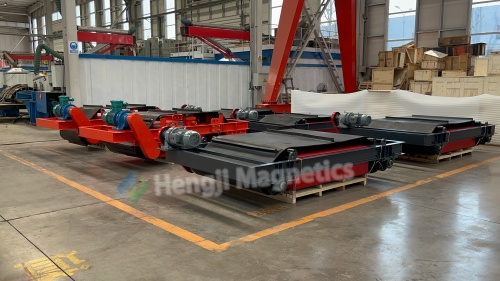
Bigger is Not Always Better: Matching Drum Diameter to Capacity in Dry Drum Magnetic Separators
When selecting a dry drum magnetic separator, one question inevitably arises: is a larger drum diameter always better? The intuitive answer seems to be yes—more diameter means more surface area, longer retention time, and deeper field penetration. But the reality is more nuanced. The optimal diameter for a rotary drum magnetic separator depends on a complex balance of magnetic physics, material characteristics, and economic factors. Choosing the wrong size can mean paying for unnecessary capacity or, worse, failing to achieve your separation targets.

The Case for Larger Diameters: When Size Matters
Best Applications for Larger Diameters:
-
Processing weakly magnetic minerals where retention time drives recovery.
-
Handling coarse feed (above 10mm) requiring deep field penetration.
-
Roughing or scavenging applications with thick material layers and high throughput.
-
Situations where maximum recovery is the primary objective.


The Hidden Costs of Going Big
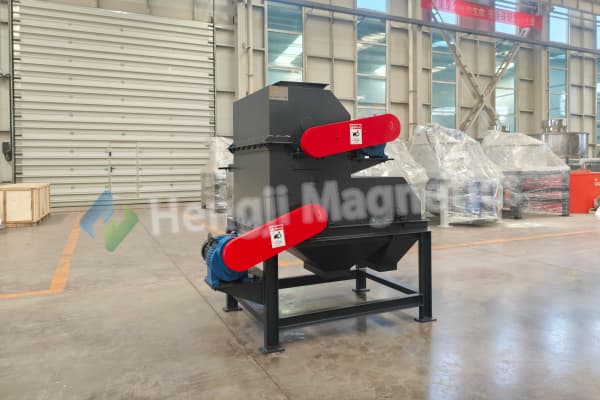

Best Applications for Moderate or Smaller Diameters:
-
Separating strongly magnetic minerals where high field gradient is the priority.
-
Processing fine materials (below 2mm) that require higher rotational speeds for effective discharge.
-
Applications with moderate throughput requirements and space constraints.
-
Cleaning stages where precision matters more than retention time.
The Matching Logic: Capacity, Not Just Diameter

Conclusion: The Right Fit, Not the Biggest Fit
Does Heat Kill Magnetism? The Real Performance of Permanent Over Belt Magnetic Separators in High-Temperature Plants
Aluminum Cans, Copper Wire, Circuit Boards: How Eddy Current Magnetic Separators Extract Value from Waste
Related Article