The Lifeline of Your Equipment: Why Cooling Systems Matter in Electro Dry Magnetic Separators
Behind every high-performance electro magnetic separator lies a hidden hero: the cooling system. It does not capture particles or generate fields, but without it, the most advanced magnetic circuit is useless. In a dry magnetic separator, the electromagnetic coil generates intense heat during operation. If that heat is not managed, the consequences cascade—from declining magnetic strength to complete coil failure. Understanding cooling system design is essential to selecting and maintaining equipment that delivers reliable, continuous performance.
The Consequences of Cooling System Failure in Your Electro Magnetic Separator
Irreversible Magnetic Decay
Energy Spikes and Shutdowns
Structural Damage and Safety Risks


Three Cooling Designs for Electro Dry Magnetic Separators
Natural Air Cooling for Dry Magnetic Separators
-
Strengths: Minimal maintenance, no risk of coolant leaks, low cost.
-
Limitations: Lowest cooling capacity. Temperature rise is significant. Suitable only for low-power, intermittent-duty dry magnetic separator applications in well-ventilated areas.
-
Design Insight: Performance depends entirely on ambient temperature and surface area. Cooling fins help, but for continuous heavy loads, natural cooling quickly becomes a bottleneck.

Forced Air Cooling for Electro Magnetic Separators
-
Strengths: Significant improvement over natural cooling. Relatively simple, easy to maintain. Suitable for medium-power, continuous-duty electro magnetic separator applications.
-
Limitations: Air has limited heat capacity. Fans introduce noise and energy draw. Dust can clog airflow paths.
-
Design Insight: Effective forced-air cooling requires optimized ducting to eliminate dead zones and proper filtration for dusty environments. This is the most widely adopted balance of performance and simplicity.
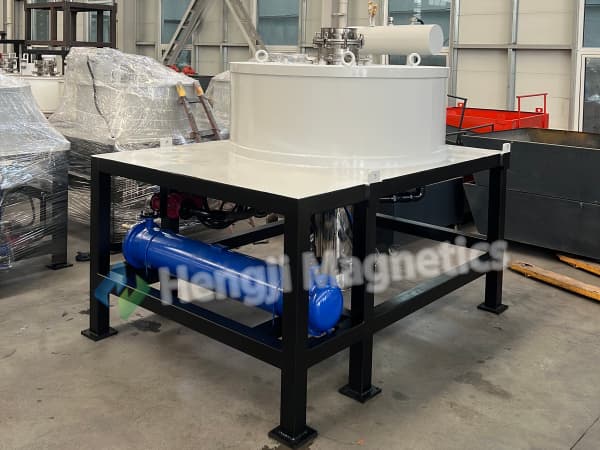
Oil-Circulation Cooling for Heavy-Duty Dry Magnetic Separators
-
Strengths: Highest cooling capacity. Oil's thermal mass absorbs heat rapidly and uniformly. The oil also provides electrical insulation and protects against oxidation and moisture. Temperature can be precisely controlled, typically below 60°C.
-
Limitations: Most complex and costly system. Requires additional cooling water supply and piping. Risk of leaks. Higher maintenance demands.
-
Design Insight: A well-engineered oil-cooled dry magnetic separator features:
-
Optimized Flow Paths: No dead zones where oil stagnates.
-
Properly Sized Heat Exchangers: Sufficient surface area and cooling water flow (using softened water to prevent scaling).
-
Comprehensive Monitoring: Sensors for oil level, temperature, and flow, integrated with alarms.
-

Selection and Maintenance: The Core Lessons
Match Cooling to Duty
Cooling Defines Performance Limits
Maintenance is Non-Negotiable
-
Air-Cooled Units: Clean filters and cooling fins. Ensure fans operate freely.
-
Oil-Cooled Units: Check oil levels, inspect for leaks, verify pump operation, and maintain cooling water quality.
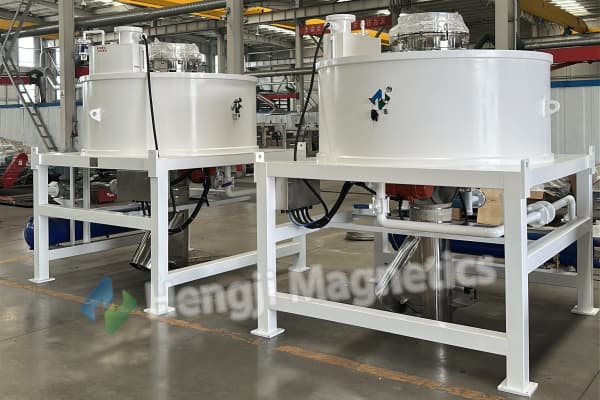
Conclusion: The Cooling System is the Heartbeat
Mounting Methods for Cross Belt Magnetic Separators: Technical Choices for QX (Inclined) and SP (Horizontal) Installation
Does Heat Kill Magnetism? The Real Performance of Permanent Over Belt Magnetic Separators in High-Temperature Plants
Related Article