Eddy Current Metal Separator: Magnetic Separation of Metals for Mixed Waste Recycling
Mixed waste from municipal solid waste, industrial scrap, e-waste, glass cullet, waste plastic doors and windows, boiler bottom ash, and auto shredder residue often contains copper and aluminum blended with plastic, glass, wood, and rubber. Manual sorting is too slow, and screening cannot separate these materials effectively. The eddy current metal separator is designed for this duty. It uses differences in electrical conductivity to perform magnetic separation of metals and recover non-ferrous metals from mixed waste. Hengci Magnetic has extensive experience in equipment structure and on-site commissioning for these recycling applications. This article explains the working principle, key components, ferrous control, case performance, maintenance, and selection points.
How the Eddy Current Metal Separator Achieves Magnetic Separation of Metals
Working Principle and the Conductivity-Density Ratio
The eddy current metal separator uses two physical phenomena: a time-varying alternating magnetic field always accompanies an alternating electric field, and a current-carrying conductor generates a magnetic field. During operation, a high-frequency alternating strong magnetic field is generated on the separation rotor surface. When conductive non-ferrous metals pass through this field, eddy currents are induced inside the metal. These eddy currents generate a magnetic field opposite to the original field direction. The non-ferrous metal is propelled forward along the conveying direction by the repulsive force. It separates from non-metallic materials. The main separation criterion is the ratio of conductivity to density. Materials with a higher ratio separate more easily than materials with a lower ratio. This is the core principle behind magnetic separation of metals using an eddy current metal separator.
Key Components and Splitter Plate Adjustment
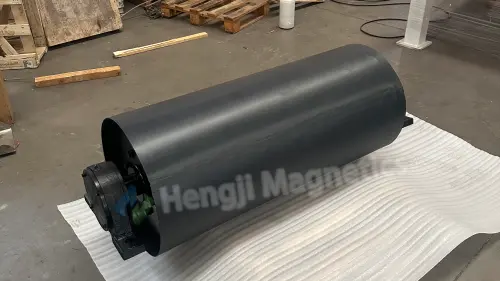
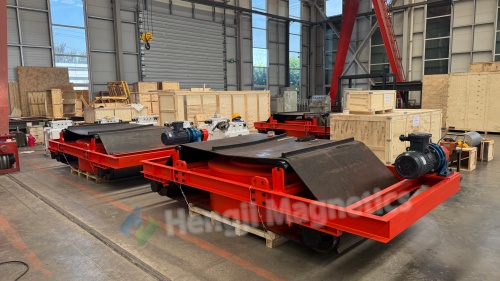
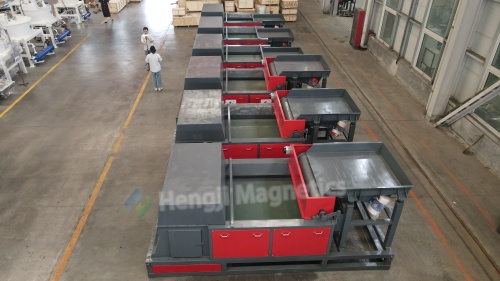
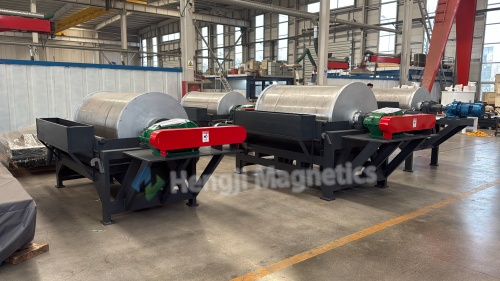
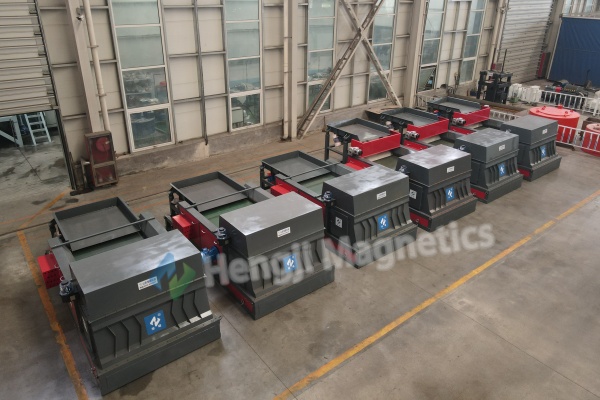
The machine consists of a separator body and a control cabinet. The body includes the magnetic separation assembly, drive motor, frame, and housing. The separation assembly is the core component, consisting of a permanent magnetic drum and a material conveying system. The conveying system includes the conveyor belt, drive drum, and geared motor. The splitter plate assembly is mounted on the frame. It must be adjusted according to material volume, density, and conductivity so that magnetic separation of metals is accurate and clean. The protective cover is installed around the frame to prevent material ejection and accidents. A vibratory feeder is installed at the end of the upper frame, supported by damping devices for uniform feeding.
Why Ferrous Control Matters Before Magnetic Separation of Metals
Risks of Ferrous Material in the Eddy Current Metal Separator
The eddy current metal separator cannot process large amounts of ferrous material. If a large amount of iron enters the machine, iron pieces can scratch the conveyor belt. Inside the equipment, iron can generate eddy current reactions that burn the outer protective drum. A small amount of iron can pass through the eddy current metal separator without damage. However, bulk ferrous material must be removed upstream. This is why magnetic separation of metals in recycling lines usually includes a ferrous removal stage before eddy current separation. The eddy current metal separator performs best when the feed is properly prepared.
Pre-Separation and Uniform Feeding
In actual production, an overhead magnet or other ferrous removal device is often installed before the eddy current metal separator. This protects the belt and the separation rotor. Uniform feeding is also important. The vibratory feeder and damping device help spread material evenly across the belt. Even feeding improves the accuracy of magnetic separation of metals and reduces carryover. The eddy current metal separator should be set up as part of a complete recycling line, not as an isolated machine.
Case Study: Eddy Current Metal Separator in E-Waste Recycling
Improving Copper and Aluminum Recovery
An e-waste dismantling company operated a refrigerator dismantling line. The copper-aluminum mixed material contained plastic, foam, and a small amount of iron. Manual sorting was inefficient and caused significant metal loss. After installing an eddy current metal separator, the splitter plate angle was adjusted according to material volume, density, and conductivity. Copper and aluminum were separated cleanly from plastic. The eddy current metal separator improved the recovery of non-ferrous metals. The magnetic separation of metals stage became more consistent and controllable.
Reducing Belt Damage with Pre-Separation
The company initially experienced belt damage from iron pieces. The belt was scratched, and the line had to stop after several shifts. Hengci Magnetic added a ferrous removal stage before the eddy current metal separator. Large iron pieces were removed first. Belt damage decreased significantly. Copper and aluminum recovery increased. This case shows how the eddy current metal separator and upstream ferrous control work together. Effective magnetic separation of metals depends on both the eddy current unit and proper feed preparation.
Maintenance and Safety for Eddy Current Metal Separator
Lubrication, Belt Inspection, and Electrical Checks
Regular maintenance keeps the eddy current metal separator reliable. Check the quality and level of lubricating oil in the gear reducer and gearboxes. Replace the oil according to its oxidation and decomposition level. When changing oil, add mechanical oil through the sight cover until the level is slightly above the center line of the dipstick. Clean internal dirt from the reducer housing and clean other parts. Lubricate moving parts periodically according to site use. Inspect the conveyor belt regularly for metal adhesion on the belt surface. Metal adhesion can cause eddy current heating and burn the belt, stopping the eddy current metal separator. Check cables for damage and terminals for poor contact to prevent short circuits. Remove dust regularly with strong air or a brush to maintain ventilation and dryness.
Belt Tracking and Long-Term Storage
If abnormal noise is heard, stop the eddy current metal separator immediately and inspect all moving parts. Replace damaged parts promptly. Check all connecting bolts for looseness and tighten them. For long-term storage, protect the equipment from rain and moisture. Pay special attention to the magnetic drum, variable-frequency motor, gear reducer, and bearing housings. Rainwater must not enter these parts. If the belt runs off-track, loosen the connecting bolts on the bearing housing at the feed end. Adjust the bearing housing jack bolt to tighten or loosen one side until the belt runs true. These steps keep magnetic separation of metals stable and safe.
Selection Tips for Eddy Current Metal Separator and Magnetic Separation of Metals
Information to Prepare
Before selecting an eddy current metal separator, prepare the material name and particle size, copper and aluminum content, ferrous content, single-shift throughput, and available site space. These details determine the separation rotor configuration, conveyor belt type, splitter plate angle, and whether a pre-ferrous removal stage is needed. For reliable magnetic separation of metals, share complete feed data with Hengci Magnetic. The eddy current metal separator can then be configured to match the actual recycling line.
Final Checklist
Confirm the feed has limited ferrous content. Confirm uniform feeding. Confirm the splitter plate can be adjusted for different material densities. Confirm maintenance access for belt inspection and lubrication. Confirm safety around the strong magnetic field. With these checks, the eddy current metal separator delivers efficient magnetic separation of metals and improves copper and aluminum recovery from mixed waste.
Conclusion
Mixed waste is difficult to sort by hand or by screening alone. The eddy current metal separator uses induced eddy currents and repulsive magnetic force to recover copper and aluminum efficiently. Proper ferrous control, uniform feeding, splitter plate adjustment, and routine maintenance are essential for stable magnetic separation of metals. Hengci Magnetic can help select the right eddy current metal separator based on material type, throughput, and site conditions. With the correct equipment and setup, non-ferrous metals are recovered instead of lost, and recycling lines run more profitably.
Dry Electromagnetic Separator for High Intensity Magnetic Separation: Removing Weakly Magnetic Iron from Fine Powders
Wet High Intensity Plate Magnetic Separator for Fine Weakly Magnetic Minerals
Related Article