Wet High Intensity Plate Magnetic Separator for Fine Weakly Magnetic Minerals
2026-11-05
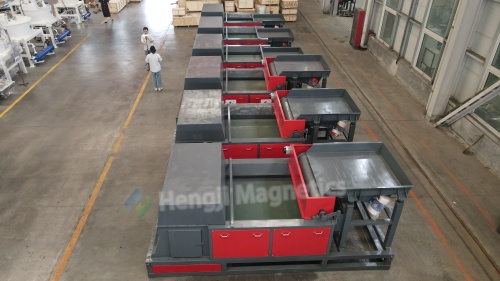
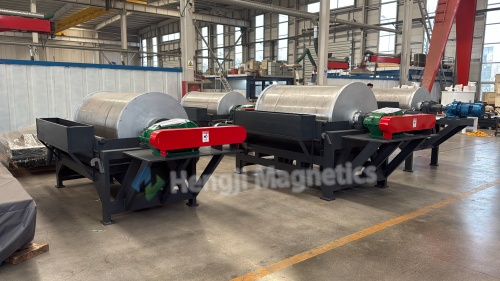
Fine weakly magnetic impurities are among the most difficult contaminants to remove in quartz sand, potassium feldspar, kaolin, mica powder, manganese ore, hematite, and limonite processing. Their particle size and specific gravity are close to the target minerals. Ordinary magnetic separators either fail to capture them or lose them during washing. The wet high intensity magnetic separators designed as a plate magnetic separator address this challenge. Hengci Magnetic integrates a plate magnetic system, feed agitation system, water system, and iron discharge system into one machine. This makes fine particle magnetic separation more reliable. This article answers common questions about clogging, magnetic force, stability, contamination, cost, installation, and maintenance.
How the Plate Magnetic Separator Solves Clogging and Carryover
Plate Magnetic System with Agitation and Washing
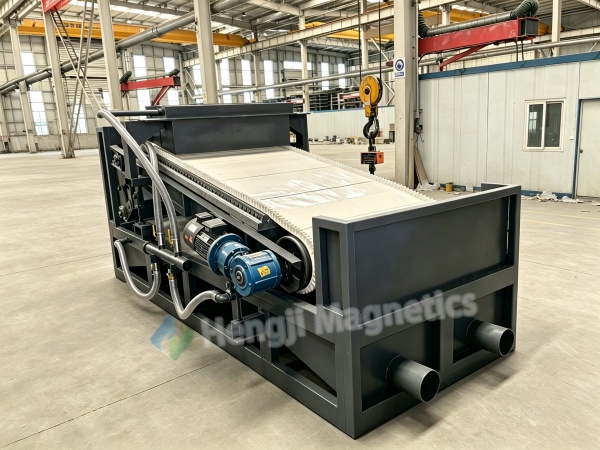
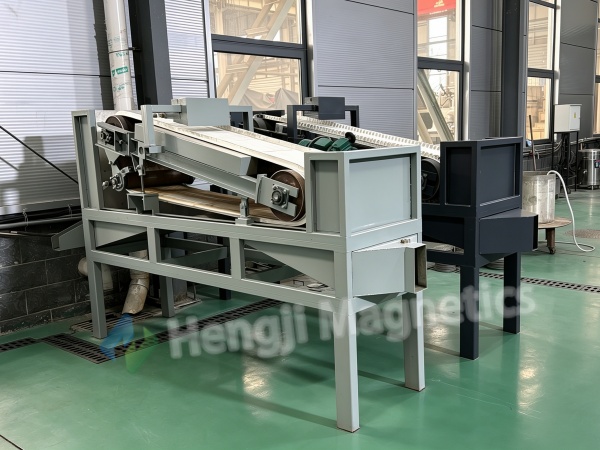
Customers ask most about flow channel clogging and material carryover. Traditional magnetic separators often clog and carry over material when processing fine particles, especially when material distribution is uneven. The plate magnetic separator uses a plate magnetic system combined with feed agitation and washing structures. Material enters the magnetic zone more evenly. Non-magnetic material flows out by gravity and is rinsed during discharge. Magnetic particles are captured over a long distance and through multiple passes in the ultra-strong magnetic field. The reverse-running discharge system carries them to the iron outlet, where they are rinsed out. This structure avoids the old problems of clogging and carryover.
Long Adsorption Path in Wet High Intensity Magnetic Separators
The wet high intensity magnetic separators design uses an extended adsorption path. Magnetic particles are captured over multiple stages. This gives fine weakly magnetic particles more opportunities to be captured. The reverse-running discharge system removes captured material continuously. The combination of even feeding, long adsorption, and thorough washing makes the plate magnetic separator suitable for fine particle processing.
Magnetic Force and Material Adaptability
Computer-Simulated Magnetic Circuit and Neodymium Core
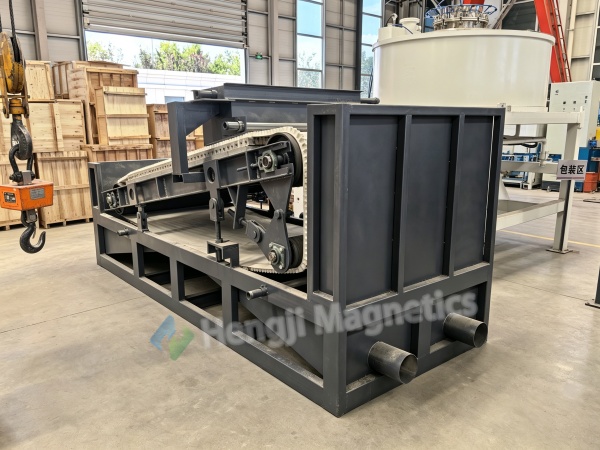
Magnetic force is the next concern. The plate magnetic separator uses a computer-simulated magnetic circuit with an opposed-pole arrangement. This maximizes the adsorption area and capture capacity for iron within the working zone. The magnetic core uses high-strength rare earth Neodymium magnets. The purity is high, the volume is large, and the magnetic force is strong. Peak field strength can reach up to 18,000 Gauss. The wet high intensity magnetic separators is suitable for weakly magnetic minerals below 5 mm and for iron removal from non-metallic minerals.
Adapting the Wet High Intensity Magnetic Separators to Fine Minerals
The wet high intensity magnetic separators design is especially useful for fine minerals whose particle size and density are close to the target material. Ordinary permanent magnets may not capture these particles. The high-gradient field of the plate magnetic separator provides enough force to capture them. This makes the equipment suitable for quartz sand, potassium feldspar, kaolin, mica powder, manganese ore, hematite, and limonite processing.
Stability, Contamination Control, and Cost
Sealed Magnetic System and Adjustable Drive
Long-term stability matters. The plate magnetic separator uses a fully sealed, oxidation-resistant magnetic system. The strong magnetic core has limited magnetic decay over ten years in harsh environments. The drive uses an adjustable-speed motor for automatic continuous operation and iron discharge. This saves labor and runs reliably. The wet high intensity magnetic separators therefore delivers stable performance over long production runs.
Preventing Secondary Contamination in the Plate Magnetic Separator
Fine processing customers often ask about contamination. All material-contact parts of the plate magnetic separator are stainless steel or non-magnetic materials. This prevents secondary contamination. Critical areas can also receive wear-resistant treatment. The structure can be open or sealed to suit different workshop conditions. The wet high intensity magnetic separators design ensures that the equipment itself does not introduce iron into the product.
Cost Comparison for Wet High Intensity Magnetic Separators
Cost is also important. The plate magnetic separator costs about one-tenth of a vertical ring high-gradient magnetic separator. For processors with limited budgets who want reliable iron removal, the investment is easier to justify. The structure also solves the clogging and carryover problems of traditional magnetic separators when processing fine particles. The wet high intensity magnetic separators therefore offers a practical balance of performance and cost.
Case Study: Plate Magnetic Separator in Quartz Sand Processing
Reducing Iron Content and Rework
A quartz sand processing company reported that fine material after ordinary magnetic separation had unstable iron content and whiteness. Customer inspections often rejected the product. Site space was limited, and the existing process was difficult to modify. Hengci Magnetic supplied a wet high intensity magnetic separators unit in plate form. The feed agitation system dispersed and mixed the material evenly, bringing slurry density to the required level. The plate magnetic zone provided multi-stage adsorption. Magnetic impurities were carried out by the reverse-running discharge system and rinsed clean. After commissioning, finished product iron content fluctuation narrowed. Rework batches decreased. The modification cost was lower than expected. This case shows how the plate magnetic separator solves a real production problem.
Installation, Commissioning, and Safety
Leveling and Belt Adjustment for the Plate Magnetic Separator
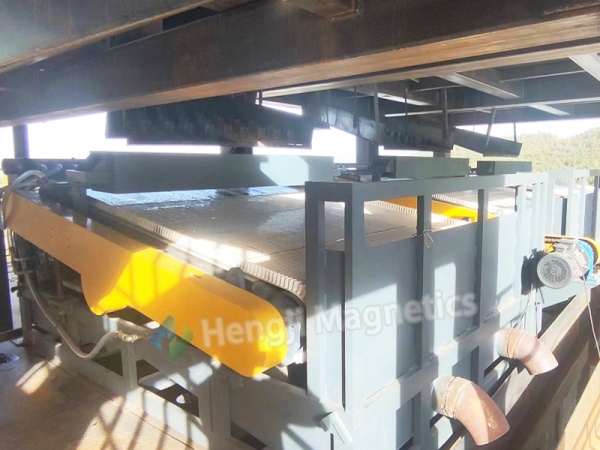
After positioning the plate magnetic separator, level it left to right using the magnetic plate as the reference. Before use, check piping connections, power connections, and grounding. After power-on, check whether the drive drum rotates and whether the belt runs off-track. If the belt runs left, adjust the left adjusting screw or loosen the right screw. If it runs right, do the opposite. Feed only after the belt runs smoothly in the correct direction. If the belt is loose, raise the equipment bottom and tighten the idler. Control material layer thickness on the belt according to density and particle size. When replacing the belt, pull out the lower polished rod on the left side plate, lift the magnetic plate, and then replace the belt.
Shutdown and Magnetic Safety for Wet High Intensity Magnetic Separators
After shutdown, flush all parts with water to prevent the belt from sticking to the magnetic plate. Before startup, turn on water first and wet the belt fully. Do not turn the VFD speed knob after the main motor is powered off. Lubricate bearings regularly to prevent damage to the drum shaft and bearings. A strong magnetic field is present around the wet high intensity magnetic separators. Do not place watches or instruments nearby. Operators must not carry sharp ferrous tools or objects close to the unit.
Conclusion: Choose the Right Plate Magnetic Separator and Wet High Intensity Magnetic Separators
Selecting a plate magnetic separator and wet high intensity magnetic separators means matching mineral type, feed particle size, slurry density, throughput, and site space. Provide these details to Hengci Magnetic. We will configure the magnetic zone size, structure type, and whether wear-resistant treatment is needed. With the right plate magnetic separator and wet high intensity magnetic separators, fine weakly magnetic impurities are captured before they reach the final product. Product purity improves, rework decreases, and production runs more smoothly.
Eddy Current Metal Separator: Magnetic Separation of Metals for Mixed Waste Recycling
Dry Electromagnetic Laboratory Magnetic Separator for Fine Powders
Related Article
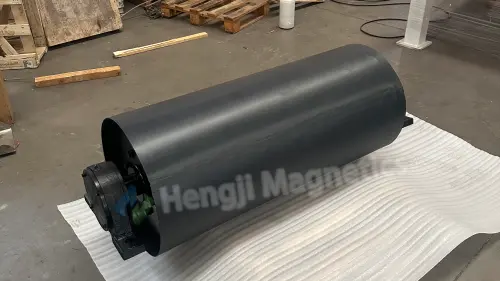
The magnetic pulley permanent magnetic separator captures tramp iron buried under thick material layers using rotary magnetic force, with low energy use and reliable conveyor protection.
Magnetic Pulley Separator and Permanent Magnetic Separator for Iron Removal Under the Material Layer
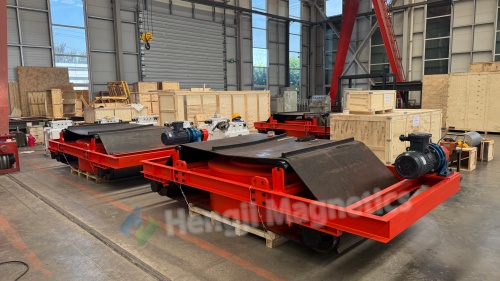
The cross belt electro magnetic separator combines cross belt and electromagnetic separation to remove tramp iron from conveyor belts with correct positioning and automatic discharge.
Cross Belt Electro Magnetic Separator: Correct Positioning to Stop Tramp Iron from Slipping Through