Dry Electromagnetic Laboratory Magnetic Separator for Fine Powders
2026-10-31
In abrasives, carbon black, refractories, chemical raw materials, grain, and feed processing, iron removal tests often look good in the lab but fail on the production line. The root cause is usually a mismatch in magnetic field conditions between the test unit and the full-scale machine. The dry electromagnetic separator designed as a laboratory magnetic separator solves this problem. Hengci Magnetic combines electromagnetic excitation with vibratory feeding so that lab tests and small-batch dry powder production can use the same evaluation standard. This article explains why lab data often fails to scale up and how the right laboratory magnetic separator makes test results repeatable and reliable.
Why Laboratory Magnetic Separator Data Often Fails to Scale Up
A common customer question is whether lab test data can be directly scaled up. The answer depends on whether the test equipment can reproduce the same magnetic conditions as the production line. Many laboratory magnetic separator tests are run on fixed-field permanent magnet units. The field strength is set by the magnet material and cannot be adjusted. When the same powder is processed on a production line with a different magnetic circuit, the results diverge. The dry electromagnetic separator avoids this problem by using an adjustable electromagnetic field.
The Gap Between Fixed-Field Dry Electromagnetic Separator Tests and Production
With a fixed-field dry electromagnetic separator, the test unit may capture iron well on a small sample. But the production machine may have a different field depth, gap, or feed layer. The lab result then becomes unreliable. A laboratory magnetic separator with electromagnetic excitation allows the operator to record the field conditions used in the test. The same conditions can then be applied when scaling up to production equipment. This reduces the gap between lab and plant.
How the Dry Electromagnetic Separator Makes Lab Data Repeatable
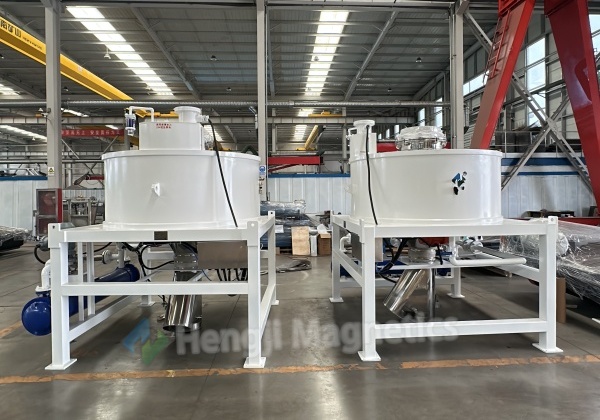
The dry electromagnetic separator uses a dedicated silicon rectifier control cabinet to supply DC excitation power. When energized, the steel magnetic conductive plates become magnetized. Powder material is vibrated by a vibration motor and enters the plates from top to bottom. Iron and metal powders and their oxides are attracted to the steel plates. The working chamber provides high magnetic flux density and stable operation. Because the magnetic field is controlled by excitation current, test conditions can be recorded and repeated. This is the key advantage of using a laboratory magnetic separator for process validation.
Adjustable Magnetic Field and Vibration for Different Powders
The dry electromagnetic separator allows stepless adjustment of vibration frequency and amplitude. Users can tune the vibration motor frequency through a variable frequency drive. This means weakly magnetic minerals and strongly magnetic materials can be tested on the same laboratory magnetic separator. Different powders do not require different machines. The dry electromagnetic separator adapts to a wide range of particle sizes and material types. This flexibility makes the laboratory magnetic separator suitable for comparative tests across multiple feedstocks.
Cooling and Protection for Continuous Lab Operation
Long-term coil heating is a practical concern. The dry electromagnetic separator includes oil temperature alarm and cooling oil temperature alarm functions. A tube-and-shell cooler reduces oil temperature. Cooling water must be softened to prevent scaling in the cooler. This protects the electromagnetic coil and ensures stable operation. The laboratory magnetic separator also includes over-temperature and over-current alarms. These protections allow continuous testing without risking coil damage.
Applications and Case Study: Laboratory Magnetic Separator in Abrasive Testing
A typical case comes from an abrasive processing company. The company used a fixed-field permanent magnet dry separator for customer iron removal tests. The same powder performed well in the lab but often failed to meet targets on the customer’s production line. Repeated disputes followed. Hengci Magnetic supplied a dry electromagnetic separator as a laboratory magnetic separator. The unit made both excitation current and vibration frequency adjustable. Tests were run using the customer’s actual working conditions, and the magnetic field settings were recorded. Production equipment specifications were then recommended based on those recorded conditions. After commissioning, the consistency between lab data and production results improved. Rework and communication problems decreased.
From Lab Scale to Production Line with the Same Magnetic Conditions
This case shows why a laboratory magnetic separator must be more than a small test unit. The dry electromagnetic separator must allow the operator to set, record, and repeat magnetic conditions. When the same conditions are used on the production line, the lab data becomes meaningful. The laboratory magnetic separator therefore becomes a validation tool, not just a sample tester.
Safety and Selection Tips for Dry Electromagnetic Separator
Operators should follow basic safety rules. Strong magnetic fields are present around the dry electromagnetic separator. Keep magnetic cards, medical devices, electronic equipment, and precision instruments away from the unit. Do not open inlet or outlet connections while material is flowing. Do not open terminal box covers while power is on. The internal electromagnetic coil wiring is complex and must not be disassembled by users. Do not connect the unit to other control cabinets without manufacturer approval.
What Information to Prepare Before Choosing a Laboratory Magnetic Separator
Before selecting a laboratory magnetic separator, prepare the material name, particle size, moisture content, expected magnetic field conditions, and throughput. These details determine excitation power, vibration parameters, and cooling requirements. With this information, Hengci Magnetic can configure the dry electromagnetic separator to match your test plan. Proper selection of the laboratory magnetic separator ensures that lab results can be compared with production data.
Conclusion: Use the Right Laboratory Magnetic Separator to Validate Your Process
Lab data should predict production performance. A fixed-field test unit often cannot do that. The dry electromagnetic separator designed as a laboratory magnetic separator provides adjustable magnetic field, adjustable vibration, and reliable cooling. It records test conditions and supports scale-up. For abrasives, carbon black, refractories, chemical powders, grain, and feed, the laboratory magnetic separator helps validate iron removal before full-scale investment. If your lab results and production results do not match, contact Hengci Magnetic. We will help you select the right dry electromagnetic separator and laboratory magnetic separator for your process validation.
Wet High Intensity Plate Magnetic Separator for Fine Weakly Magnetic Minerals
Permanent Magnetic Separator for Conveyor Belt: Why Iron Removal Falls Short and How to Fix It
Related Article
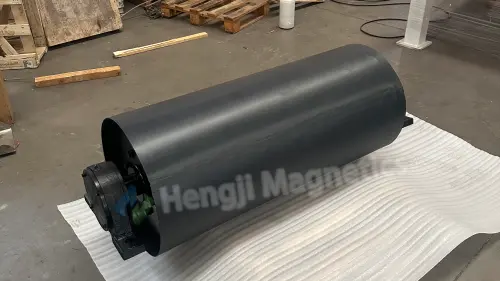
The magnetic pulley permanent magnetic separator captures tramp iron buried under thick material layers using rotary magnetic force, with low energy use and reliable conveyor protection.
Magnetic Pulley Separator and Permanent Magnetic Separator for Iron Removal Under the Material Layer
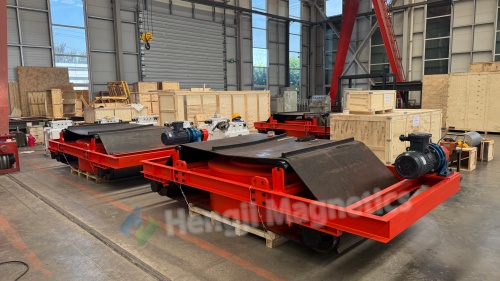
The cross belt electro magnetic separator combines cross belt and electromagnetic separation to remove tramp iron from conveyor belts with correct positioning and automatic discharge.
Cross Belt Electro Magnetic Separator: Correct Positioning to Stop Tramp Iron from Slipping Through